
На чтение 4 мин. Просмотров 28 Опубликовано 24.11.2020
Содержание
- Малый бизнес и администрирование
- Развлечения
- Возможность продавать по всему миру
- Общение с клиентами
Если бизнесу удается просуществовать на рынке более пары десятилетий, то это считается довольно редким явлением. В период между 1920 и 2012 годами годы жизни компаний, зарегистрированных на американском фондовом индексе «Эс энд Пи 500», сократились с 67 лет до менее двадцати. Многие компании, включенные в данный индекс, предлагают товары, которых пару десятков лет назад еще не существовало. Такие компании как Microsoft, Amazon и Alphabet имеют наибольшую капитализацию, и их продукты мы воспринимаем как данность, хотя не так давно люди и представить не могли, куда их приведет прогресс.
Неудивительно, что бизнес сильно изменился под влиянием технологий, и что новые технологии скорректировали наш подход к ведению бизнеса в целом.
Малый бизнес и администрирование
Чаще всего большинство преимуществ современных технологий идет на пользу крупному бизнесу, в расположении которого есть больше средств для инвестирования в новые системы, компьютеры и инфраструктуру сети. Однако у малого бизнеса также есть возможность извлечь из изменений выгоду для себя. Например, ведение бухгалтерии онлайн через Xero или Wave стало гораздо проще с меньшим количеством бумаг. Используя данные программы намного удобнее выверять банковские счета, а с помощью телефона – на ходу записывать расходы. Прогресс также сказался и на управлении документами и коворкинге. Теперь совсем не обязательно находиться в одной комнате с сотней коллег в окружении огромных шкафов с документацией. На смену прошлому веку пришли облачные хранители, такие как Яндекс.Диск, Dropbox, Google Drive, а задачи легко делегировать и обсуждать в Trello или Slack.

Развлечения
Самым глобальным и очевидным изменением в сфере развлечений является переход от покупки DVD дисков к стримингу. Походы в 1C за новым фильмом, которые когда-то были событием, сменились долгожданными релизами на Netflix и Амедиатеке. Когда-то совет консультанта влиял на выбор очередного фильма для просмотра, однако сейчас система выбора основана не на людях, а на алгоритмах. Прибыль Netflix служит своего рода показателем того, что клиентам больше нравится выбор из конкретных категорий на стриминговой платформе – годовая прибыль Netflix за 2019 составила около 20 миллиардов долларов.
Изменения не обошли стороной и сферу игр. В настоящее время любой игрок имеет доступ к высококачественному контенту в любой точке мира, и это довольно сильно меняет бизнес-модель для игровой индустрии. Многие игры на данный момент работают на бесплатной основе (free-to-play). Иными словами, пользователю не нужно платить за то, чтобы играть. Желаемую игру можно сразу скачать на любое устройство и играть бесплатно, а при желании игрок может докупить различные опции внутри игры, например, дополнительные жизни, инструменты и расширения. Выбор бесплатных игр настолько велик, что может поставить любого в трудное положение. Варианты игр выпускают для различных платформ и устройств, а также различных жанров, от RPG и шутеров от первого лица, до аркад и экшн-игр. Любой также может насладиться бесплатными играми в покер, которые сохранили все полюбившиеся функции из компьютерной версии.
Данные изменения также помогли новоиспеченным создателям игрового контента донести свои труды до широкой аудитории, что стало более легким процессом.
Возможность продавать по всему миру
За последние годы глобализация подвергалась суровой критике со стороны тех, кто считает, что она разрушает рынок труда и уводит прибыль из страны. Однако, стоит заметить, что с глобализацией пришло значительное снижение цен на многие товары. Это связано с возможностью приобретать товары у продавцов из любой точки мира, а также с более легким сотрудничеством с другими иностранными бизнесами. Например, создание общеевропейской дистрибьюторской сети с минимальным капиталом и почти полным отсутствием нанятых работников – вполне реальная задача. С помощью сервиса eBay или Amazon многие могут торговать на территории европейского экономического пространства без создания отдельных складов или открытия магазинов в других странах. Продавец может проживать в Германии, а продавать товары покупателям в Испании, Польше и Франции через компьютер. Огромный ассортимент потенциальных товаров представлен на сайтах таких китайских компаний как Alibaba и AliExpress, которые позволяют оформлять заказы как в розницу физическим лицам, так и оптом для бизнесов.
Общение с клиентами
Многие бренды, такие как Coca Cola, за последние десять лет прославились своими маркетинговыми ходами и всем знакомой рекламой. Для построения доверительных отношений между брендом и покупателем компании тратят миллионы на рекламу по телевизору и спонсорства, чем порой не могут похвастаться представители малого бизнеса. Зачастую малый бизнес занимался более локализованной рекламой, например, заметками в газетах, флаерами или просто надеялся, что молва поможет привлечь новых клиентов. Сегодня благодаря технологиям бизнес любого размера может общаться с клиентами при помощи социальных сетей и интернета, что является более эффективным способом. Покупатели могут задать любой вопрос с любого устройства, различные проблемы могут быть решены оперативнее, а отзывы помогут привлечь новых клиентов гораздо быстрее.
Как телефон изменил наш мир
Средства коммуникации развивались вместе со становлением цивилизации. В XIX веке на помощь традиционным письмам, отправляемым в почтовых конвертах, пришел телеграф. Но он был не слишком удобен в обращении. Настоящая революция в технических средствах общения произошла после изобретения и повсеместного внедрения телефона.

Инструкция
История появления телефона очень интересна. К изобретению этого способа передачи голоса на расстояние почти одновременно приблизились несколько человек, и все же создателем первого телефона принято считать Александра Белла. Новый вид связи был запатентован в 1876 году, но первый пригодный для работы аппарат был создан несколько позже. Началась новая эра в технологиях связи, затронувшая все без исключения сферы жизни.
Физические эффекты, положенные в основу телефонии, были открыты, как водится, случайно. Белл длительное время работал с людьми, имевшими дефекты речи и слуха. По роду своей деятельности ему приходилось изучать акустику. Однажды во время работы над устройством для усиления звука он и открыл возможности передачи голоса на расстояние по проводам.
Это открытие перевернуло весь мир. Если говорить образно, с момента изобретения телефона расстояние между разными точками планеты очень сильно сократилось. Аппарат для разговора по проводам был продемонстрирован широкой общественности. Изобретение настолько впечатлило представителей делового мира, что вскоре Белл смог основать собственную телефонную компанию, быстро превратившуюся в мощный и преуспевающий концерн. Так появилась новая индустрия.
Телефон не сразу завоевал доверие широких слоев населения. Поначалу находились даже те, кто требовал начать против изобретателя уголовное преследование, считая его мошенником, рассчитывающим заполучить деньги доверчивых обывателей. Однако постепенно страсти утихли. Каждый желающий мог убедиться, что техническая новинка не только исправно работает, но и способна коренным образом изменить быт людей, сделав жизнь более динамичной и комфортной.
Повсеместное внедрение телефонной связи решило множество проблем, с которыми раньше приходилось мириться. Теперь можно было за считанные секунды установить голосовую связь с абонентом, который находился иногда на другом конце планеты. Телефон изменил способы ведения бизнеса, придав ему динамику. Передача важной деловой информации стала занимать минуты, а не часы и дни, как было раньше.
Более века развивалась телефонная связь, становясь качественной и доступной. Еще один технологический прорыв был совершен, когда ученые открыли принципы, позволившие сделать телефон беспроводным. С конца прошлого века началось массированное внедрение мобильной и спутниковой телефонной связи. Теперь для разговора с абонентом не требовалось прокладывать дорогостоящие телефонные линии, нуждавшиеся в обслуживании.
Современный мобильный телефон стал неотъемлемой частью быта во всех уголках планеты. С его помощью можно не только поговорить с близкими или отправить им короткое текстовое сообщение. Телефон превратился в мощный многофункциональный комплекс, который позволяет управлять банковским счетом, выходить в интернет, прослушивать радио. Сегодня представить себе жизнь без этого маленького мобильного помощника практически невозможно.
Видео по теме
Войти на сайт
или
Забыли пароль?
Еще не зарегистрированы?
This site is protected by reCAPTCHA and the Google Privacy Policy and Terms of Service apply.
Недавно, листая ленту уже не помню какой соцсети, зацепился глазом за публикацию с названием вроде «12 сотовых телефонов, которые больше всего изменили мир» (12 most influential cellphones). Прочитал и подумал, что для мира-то это, может, и так, а вот в России на становление сотовой связи повлияли совсем другие аппараты.
И вот я составил наш, локальный список сотовых телефонов, которые оставили свой след в истории или что-нибудь сильно поменяли. Ну или как минимум запомнились нам так, как никакие другие.
⇡#Siemens A35
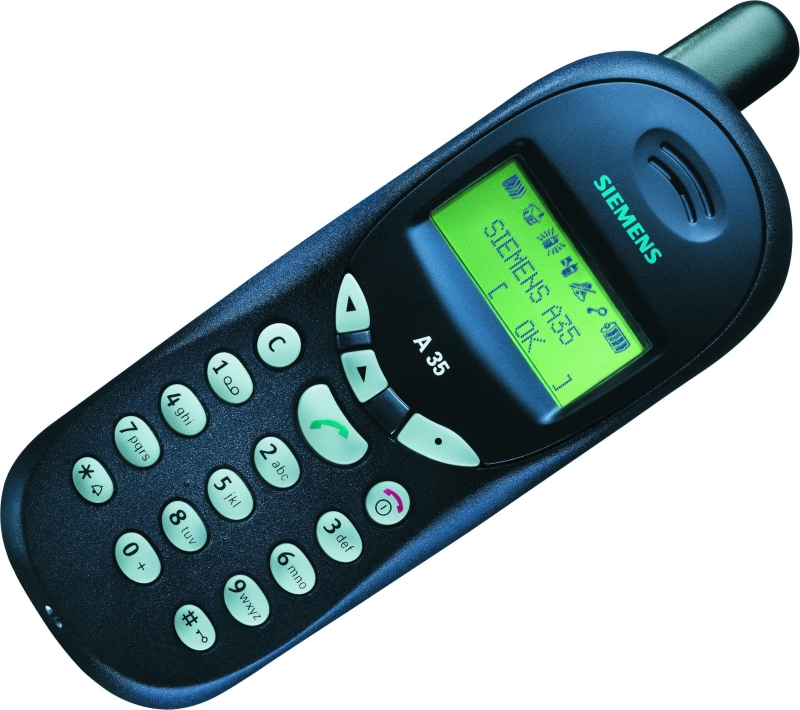
| Siemens A35 | |
|---|---|
| Год выпуска | 2000 |
| Дисплей | Черно-белый, 2 строки, 16 символов в каждой |
| Процессор | НД |
| ОЗУ | НД |
| Флеш-память | НД |
| Камера | Нет |
| Размеры, мм | 118 x 46 x 28 |
| Масса, г | 122 |
| Особенности | Нет |
Тот момент, когда человек прямоходящий понял, что сотовый телефон может быть не только у избранных. Siemens A35 появился в 2000 году, то есть, получается, всего-то 19 лет назад. Нельзя сказать, что мобильных телефонов в России вообще до этого не было — сотовая связь у нас появилась в далеком 1991 году, но на тот момент пользоваться ей было решительно невозможно: покрытие маленькое, цены чудовищные.
Помню, году в 1997 в переходе метро увидел человека с сотовым телефоном в руке и подумал: если уж у него есть сотовый, то чего он в метро делает, у него ж наверняка машина должна быть. Вот, в районе 2000 года этот стереотип окончательно сломался — Siemens A35 был доступен буквально всем. В том числе не слишком обеспеченные семьи покупали его даже детям-школьникам, чтобы контролировать, куда заносит непосед, ну и просто чтобы меньше беспокоиться.
Это был максимально простой аппарат, который практически не мог помешать школьнику учиться — в нем не было игр, не было полифонии, не было… впрочем, в нем не было ничего. Даже виброзвонка. Была возможность подключаться к сетям GSM, звонить, отправлять и получать СМС-сообщения (собственной памяти опять-таки не было: можно было хранить 20 СМС в памяти SIM-карты — и все). Но даже такой сотовый было иметь круто — по крайней мере среди школьников.
Альтернатива: Siemens A36. С виброзвонком — больше никакой разницы не было. Оба эти телефона по функциональности значительно уступают даже самым дешевым трубкам начала-середины двухтысячных, которые мы сейчас привыкли именовать «нокией с фонариком».
⇡#Nokia 3310
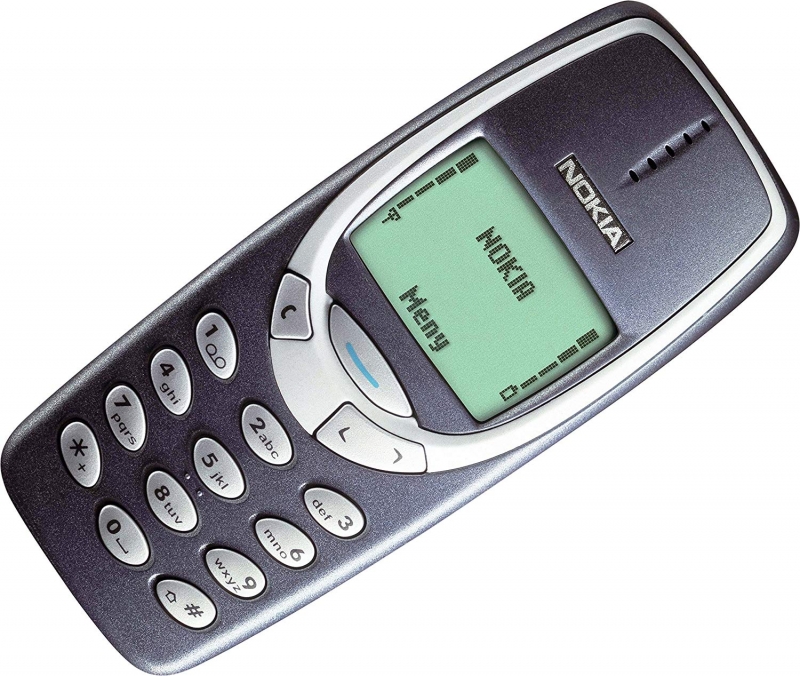
| Nokia 3310 | |
|---|---|
| Год выпуска | 2000 |
| Дисплей | Черно-белый, 5 строк |
| Процессор | НД |
| ОЗУ | НД |
| Флеш-память | НД |
| Камера | Нет |
| Размеры, мм | 113 x 48 x 22 |
| Масса, г | 133 |
| Особенности | Нет |
Читать обзор Nokia 3310 на 3DNews (да, мы настолько древние, что у нас есть обзор этого аппарата)
Тут всем все понятно — не даром HMD Global в первый год своего пришествия решила оживлять именно эту классику. Nokia 3310 — телефон среднего класса, доступный многим, но, конечно, не такой дешевый, как примитивный Siemens A35. Выпущен он был в том же 2000 году, но по функциональности значительно отличался — в нем была «змейка», калькулятор, поддержка системы предиктивного ввода T9 и так далее.
Да и ощущения были совсем другие: там, где у Siemens A35 были дурацкие толстые резиновые клавиши, как у телевизионного пульта ДУ, Nokia 3310 предлагала симпатичную клавиатуру с четким нажатием и приятным шрифтом. И у нее был дизайн. Нет, даже так — Дизайн, с большой буквы.
Немного цифр для сравнения с тем, что у нас сейчас происходит на рынке телефонов: Nokia 3310 весила 133 грамма (где-то как iPhone 7), при этом разрешение ее монохромного дисплея составляло 84 x 48 пикселей (почти в 250 раз меньше, чем у iPhone 7). Тогда еще возможности дисплея измеряли в строках текста — сколько строк влезает на экран. Так вот, у Nokia 3310 влезало пять строк (включая верхнюю с иконками и часами) — и это было довольно круто по тогдашним меркам.
Для многих Nokia 3310 стала своего рода символом прочности и качества — с этим телефоном можно было делать почти что угодно, но он продолжал работать как часы. Кто-то хранит эти аппараты до сих пор и даже пользуется ими — и они вполне нормально работают в современных 2G-сетях.
Альтернатива: Nokia 3210. Предшественница 3310, снискавшая признание в США и вообще за рубежом, но не ставшая такой популярной, как 3310. Впрочем, 3410 также не удалось повторить успех классической 3310. Собственно, в Штатах именно Nokia 3210 для очень многих людей стала первым телефоном, тогда как у нас эта роль доставалась 3310 или Siemens A35.
⇡#Siemens ME45
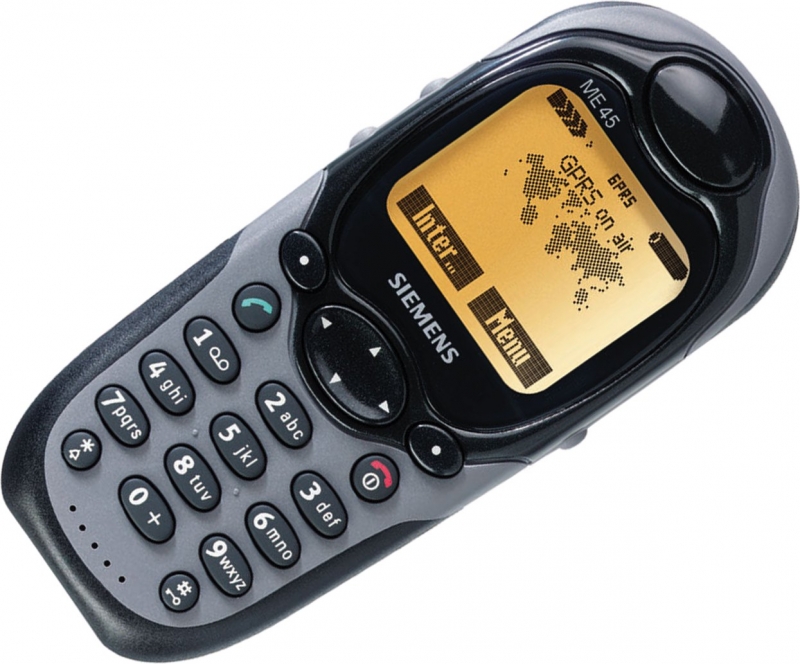
| Siemens ME45 | |
|---|---|
| Год выпуска | 2001 |
| Дисплей | Черно-белый, 101 x 80 точек, 5 строк |
| Процессор | НД |
| ОЗУ | НД |
| Флеш-память | НД |
| Камера | Нет |
| Размеры, мм | 109 x 46 x 21 |
| Масса, г | 99 |
| Особенности | Влагозащита IP54 |
Если о 3310 мечтали школьники, то мечтой людей постарше зачастую становились аппараты посерьезнее. Например, Siemens ME45 — телефон бизнес-класса, совместивший в себе внушительные возможности и защищенный корпус. Нашим соотечественникам он, да и вся M-серия после него, запомнилась в первую очередь именно защищенностью и надежностью — ME45 выдерживал практически любые испытания, да и следовавшие за ним аппараты не подкачали в этом плане. Я в свое время играл его потомком, ME65, в футбол в коридоре института — без каких-либо последствий для работоспособности аппарата. В отличие от Nokia 3310, Siemens ME45 был защищен еще и от воды (стандарт защиты IP54) — за счет резиновых прокладок между частями корпуса.
Правда, эта же резина сыграла со стареющими ME45 злую шутку — она норовила слезать слоями при трении о ткань или о руку, оставляя малоприятные резиновые катышки.
Впрочем, ME45, как и его собрат по железу — S45, был примечателен еще и тем, что умел работать с Интернетом: он поддерживал WAP и GPRS, что на тот момент в телефонах было скорее диковинкой, чем стандартной опцией. В S45 была даже электронная почта, которой ME45 почему-то не досталось. Полезность этой опции на тот момент, впрочем, весьма сомнительна. Зато Siemens ME45 можно было использовать как проводной модем для компьютера — дорого, однако возможность выйти в Интернет откуда угодно была настоящим шиком (если вдруг кто-то читал “Одиночество в Сети”, написанное как раз в 2001-м: наверняка помните, как Якуб скачивал и читал электронное письмо в поезде с ноутбука и как на него смотрела его попутчица).
Альтернатива: Siemens SL45. По железу он немного отличался от ME45, был лишен влаго- и пылезащиты, зато обладал MP3-плеером. Собственно, это был вообще первый в мире аппарат с такой функцией. Впрочем, особо много музыки в него было не залить — в комплекте поставлялась MMC-карта на 32 Мбайт, то есть влезало на нее где-то пол-альбома со скромным битрейтом 128 бит. Но сильно больше на тот момент не влезало никуда — максимальным объемом для карт, кажется, были 64 Мбайт. SL45 был ощутимо дороже ME45, и поэтому считался куда более престижным, в том числе в кругах людей с малиновыми пиджаками и «Гранд Чероки».
⇡#Nokia 6600
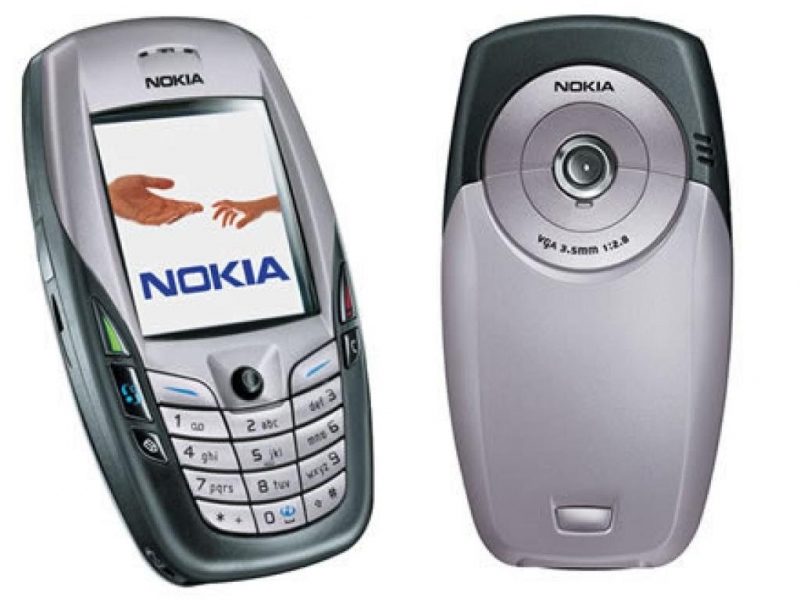
| Nokia 6600 | |
|---|---|
| Год выпуска | 2003 |
| Дисплей | LCD, 2,1“, 176 x 208 |
| Процессор | ARM 9, 1 x 10⁴ МГц |
| ОЗУ | НД |
| Флеш-память | 6 Мбайт + MMC |
| Камера | 0,3 Мп |
| Размеры, мм | 109 x 58 x 24 |
| Масса, г | 122 |
| Особенности | Symbian OS Series 60, Bluetooth 1.1, ИК-порт |
Читать обзор Nokia 6600 на 3DNews
Пролистаем на пару лет вперед — и рынок телефонов значительно изменится: на нем появляются и начинают завоевывать все большую популярность смартфоны и коммуникаторы. Они опять-таки были и раньше (первый Nokia Communicator датируется вообще 1996 годом), но только в 2003-м они начали становится более-менее массовыми. И существенную роль в этом сыграла Nokia 6600 — пухленький, но довольно удобный смартфон на базе операционной системы Symbian Series 60.
Под экраном с диагональю 2,1 дюйма тут все еще располагались цифровые клавиши, а также находка тех времен — мини-джойстик. В тот момент было модно различать: смартфон — с цифровыми кнопками, коммуникатор — без них, но с сенсорным экраном. И пускай 6600 была всего лишь смартфоном, за вполне разумную цену она предлагала все что душе угодно: тут тебе и камера, и карта памяти, и возможность воспроизводить MP3, и игры, и поддержка Java, и тысячи приложений на любые случаи жизни. Люди читали с 2,1-дюймового экрана книжки — и радовались этой возможности. Смотрели на нем фильмы, делали фотографии с разрешением 640х480, общались по ICQ и так далее. В общем, Nokia 6600 позволяла делать практически все то, что позволяют делать современные смартфоны — с поправкой на то, что «Фейсбука» с «Инстаграма» на тот момент еще не было. Ну и GPS в 6600 не завезли, так что навигатор из него не получался.
Альтернатива: Motorola MPX200 — раскладушка на Windows Mobile, навсегда занявшая свое место в моем сердце. В ней не было ничего — ни Bluetooth, ни Wi-Fi, ни камеры — но была полноценная операционка. И это решало все. С крошечного, 2,2-дюймового экрана я прочитал не один десяток книг и даже посмотрел пару сериалов. Впрочем, сериалы на дисплее такого размера все же вызывали больше боли, чем удовольствия. Кажется, я также пытался на этом аппарате программировать, но — судя по тому, что я до сих пор не умею это делать — что-то пошло не так.
⇡#Nokia 8800
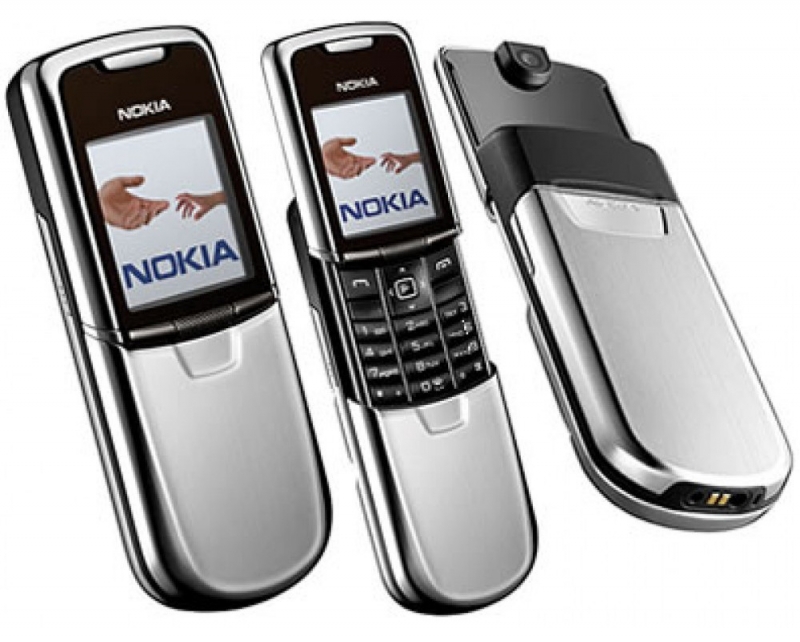
| Nokia 8800 | |
|---|---|
| Год выпуска | 2005 |
| Дисплей | LCD,1,8“, 208 x 208 |
| Процессор | НД |
| ОЗУ | НД |
| Флеш-память | 64 Мбайт |
| Камера | Нет |
| Размеры, мм | 107 x 45 x 15 |
| Масса, г | 134 |
| Особенности | Слайдер, Bluetooth 1.2 |
Если какое-то время само наличие сотового телефона было символом статуса, то к 2005 году этот период, конечно, уже закончился. И символом статуса стало наличие очень даже конкретного аппарата — красавца Nokia 8800 в очень необычном форм-факторе слайдера-не-понятно-зачем. Никакой супер-крутой начинки в нем не было, как не было и умной операционной системы — здесь стояла простенькая Series 40. Но дело не в этом — Nokia одной из первых нащупала желание пользователей обладать телефоном, к которому можно было бы применить эпитет “благородный”, и воплотила его в жизнь.
Именно это отличало 8800 от остальных. Холодный, качественно отшлифованный металл корпуса. Четкий механизм слайдера. Отчетливо нажимающиеся кнопки. Кастомные рингтоны, специально написанные для этого аппарата. Также в какой-то мере именно с Nokia 8800 начался выход полубезымянных китайских аппаратов на внешние рынки — их наводнили копии премиального телефона, большинство из которых, впрочем, можно было отличить от оригинала с первого взгляда. Качественно обрабатывать металл и делать так, чтобы телефон можно было без отвращения держать в руках, китайцы научились лишь несколькими годами позже.
Nokia 8800 настолько полюбился китайцам, что они, кажется, клонируют его до сих пор. По крайней мере Aliexpress переполнен предложениями “оригинальных” 8800. Впрочем, часть возможно действительно оригинальные.
Альтернатива: Vertu Signature. Какие телефоны китайцы клонировали больше, чем Nokia 8800? Конечно же, Vertu. В сущности, Vertu (Signature или почти любой другой) — это та же самая 8800-я, возведенная в абсолют. Еще дороже, из совсем уж премиум-материалов, нацелена на аудиторию, для которой обладание вещами класса люкс считается строго обязательным.
⇡#Sony Ericsson K750
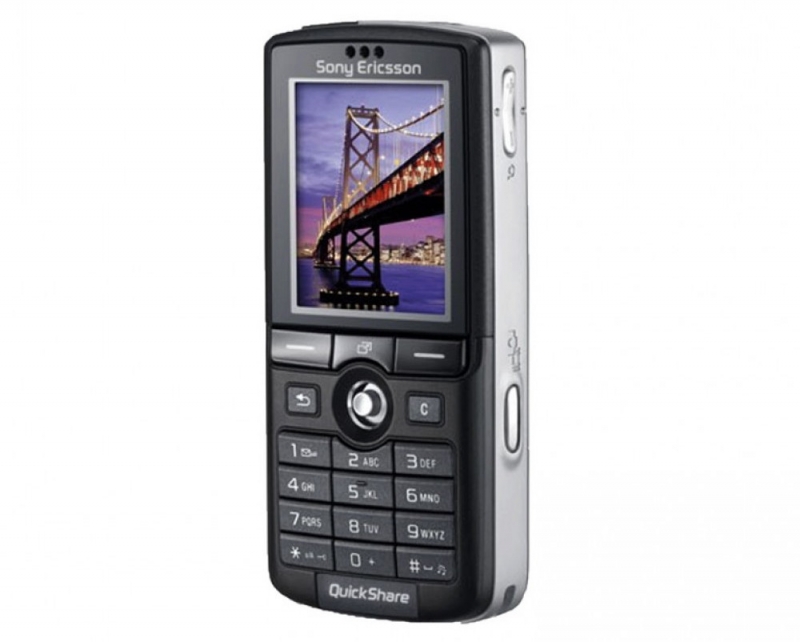
| Sony Ericsson K750 | |
|---|---|
| Год выпуска | 2005 |
| Дисплей | LCD, 1,8“, 176 x 220 |
| Процессор | НД |
| ОЗУ | НД |
| Флеш-память | 38 Мбайт + MS Pro Duo |
| Камера | 2 Мп, автофокус, вспышка |
| Размеры, мм | 100 x 46 x 20,5 |
| Масса, г | 99 |
| Особенности | Bluetooth 2.0, ИК-порт |
Читать обзор Sony Ericsson K750 на 3DNews
Первый относительно доступный телефон, в котором было все, что нужно. Ну то есть тогда казалось, что больше не нужно ничего, хотя в 2005 году смартфоны уже вовсю вошли в обиход небезразличных к технологиям людей. Однако JAVA-приложения, которые можно было ставить на обычные телефоны, многих на тот момент устраивали и вполне позволяли компенсировать отсутствие приставки «смарт». А все остальное в K750 было: и возможность установить карту памяти, и воспроизведения MP3 и MPEG4, и цветной дисплей высокого разрешения – целых 176 х 220 точек, и аккуратный дизайн.
Ну и очень приличная камера — 2 мегапикселя, с автофокусом и вспышкой. В Sony считали это настолько серьезным преимуществом, что спинку телефона даже стилизовали под переднюю грань цифромыльницы — со сдвижной шторкой и многочисленными надписями на ней, а на боку сделали кнопку спуска затвора. Собственно, от этой традиции Sony — уже без Ericsson — отказалась лишь совсем недавно, и, как мне кажется, зря.
Альтернатива: Siemens CX75/M75/S75
Это уже закат мобильного Siemens, компания приняла много неудачных решений и вскоре продаст телефонное подразделение BenQ. Когда-то тогда российские и украинские энтузиасты неожиданно обнаружили под не самым удачным интерфейсом телефонов Siemens полноценный Linux и смогли получить возможность запускать на нем самописные приложения. Без Java — быстро и эффективно. Так телефоны Siemens 65-й и 75-й серий превратились в одни из самых доступных смартфонов. К тому же у них был полноценный доступ в Интернет — это единственное, чего не доставало в остальном более совершенному в аппаратном плане K750.
⇡#Apple iPhone 2G
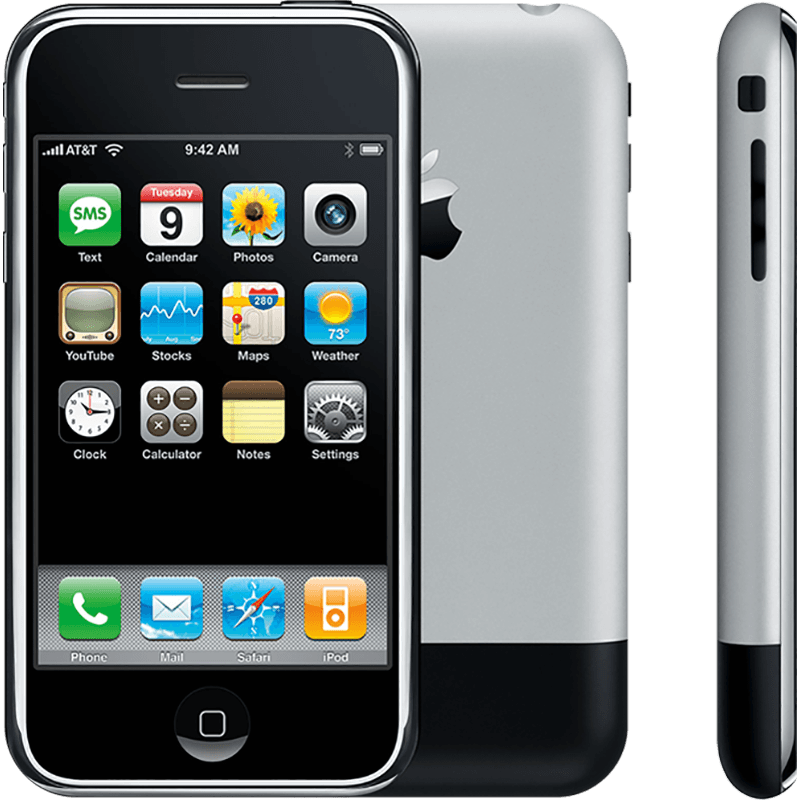
| Apple iPhone 2G | |
|---|---|
| Год выпуска | 2007 |
| Дисплей | LCD, 3,5“,320 x 480 |
| Процессор | ARM 11, 1 x 412 МГц |
| ОЗУ | НД |
| Флеш-память | 4/8/16 Гбайт |
| Камера | 2,0 Мп |
| Размеры, мм | 115 x 61 x 11,6 |
| Масса, г | 135 |
| Особенности | iOS, Wi-Fi 802.11 b/g, Bluetooth 2.0, |
Пролистываем еще на пару лет вперед — и все вновь меняется до неузнаваемости. На сцену выходит Стив Джобс и рассказывает про то, как в одном устройстве уместились телефон, интернет-коммуникатор и iPod. Мир сходит с ума, айфоны (в которых даже магазина приложений тогда еще не было) сметают с полок в десять раз быстрее, чем горячие пирожки. Ну а в России первый айфон официально не продавался, поэтому имел культовый статус с самого момента появления.
При этом это был даже не смартфон — магазин приложений App Store появился годом позже, с выходом iPhone 3G. По сути, iPhone 2G можно было называть обидным словосочетанием feature phone, что на русский можно было бы вольно перевести еще обиднее — как “телефон не без функций”.
Аппараты на Windows Mobile были на голову выше по возможностям. Но магию емкостного дисплея, скоростного набора на экране без стилуса и больших, цветных и красивых иконок немногочисленных приложений они переплюнуть не могли. Поэтому восходящая еще в 2007-м звезда Windows Mobile очень быстро закатилась, несмотря на все усилия HTC и Samsung, пытавшихся вдохнуть в нее жизнь за счет дружелюбных оболочек, которые копировали основные идеи iOS.
Альтернатива: другого такого смартфона не было, хотя чуть схожее чувство превосходства вызывали разные трубки Blackberry, которые, правда, человеку непосвященному было очень сложно отличить друг от друга. Ах да, были еще смартфоны Palm — тоже для России не очень характерные. И как раз их вместе с Blackberry Джобс ругал со сцены за неудобную клавиатуру. Справедливости ради здесь стоит упомянуть LG Prada — первый телефон с емкостным дисплеем. Но что-то у LG пошло не так.
⇡#
HTC Hero
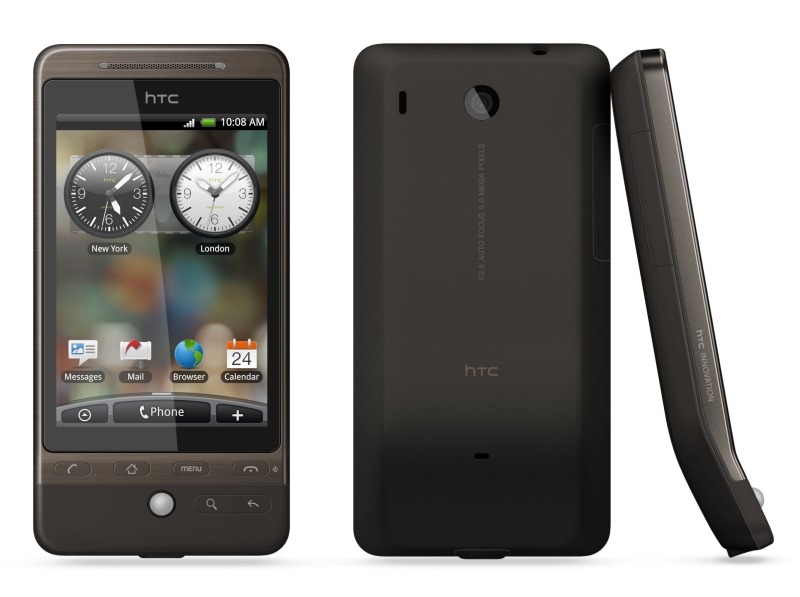
| HTC Hero | |
|---|---|
| Год выпуска | 2009 |
| Дисплей | LCD, 3,2“,320 x 480 |
| Процессор | Qualcomm MSM7200A, ARM 11, 1 x 528 МГц |
| ОЗУ | 288 |
| Флеш-память | 512 Мбайт + MicroSD |
| Камера | 5,0 Мп, автофокус |
| Размеры, мм | 112 x 56,2 x 14,4 |
| Масса, г | 135 |
| Особенности | Android 1.5, Wi-Fi 802.11 b/g, Bluetooth 2.0, |
Там, где LG не смогла, а Microsoft даже не пыталась, обязательно должен был справиться кто-то другой. И это была Google. В конце 2008 года свет увидел первый телефон на Android — T-Mobile G1, также известный как HTC Dream. Только вот до России он не добрался, так что первым Android-смартфоном в нашей стране стал HTC Hero, вышедший в начале 2009-го. И он оказался удивительно удачным — как по мне, так намного удачнее, чем G1.
Если сейчас “голый” Android — это скорее хорошо, то тогда это было либо плохо, либо очень плохо. Система была страшной и недоработанной, ей не хватало огромного количества важных функций, также в ней был вагон и маленькая тележка эргономических ошибок. HTC исправляла часть из них за счет оболочки Sense — и на тот момент казалось, что альтернатив Sense просто нет. Собственно, на рынке поначалу и было-то всего несколько аппаратов на Android: один Samsung, один HTC и один Highscreen, и среди этой троицы без крови из глаз пользоваться можно было только HTC. У аппаратов на Android тогда еще было много кнопок, часть из них предлагалась с QWERTY-клавиатурой (эх, времена).
Поспорить с iPhone 3GS новорожденный зеленый робот толком не мог, но открытость операционной системы и ее доступность для любого производителя принесла свои плоды — “Андроид” быстро окреп и уже в 2010-м обогнал iOS по рыночной доле. В 2009-м доля, конечно, была намного меньше, но на Hero пришлась немалая ее часть.
Альтернатива: HTC Desire, вышедший спустя год после появления Hero. Вместе с ним появился «доработанный Hero» под названием Legend, но Desire пошел, а Legend — нет. Здесь же можно вспомнить Motorola Droid, очень полюбившийся энтузиастам клавиатурный смартфон. Наш веб-мастер, счастливый обладатель этого аппарата, обновлял на нем прошивку едва ли не каждый день.
⇡#Apple iPhone 4
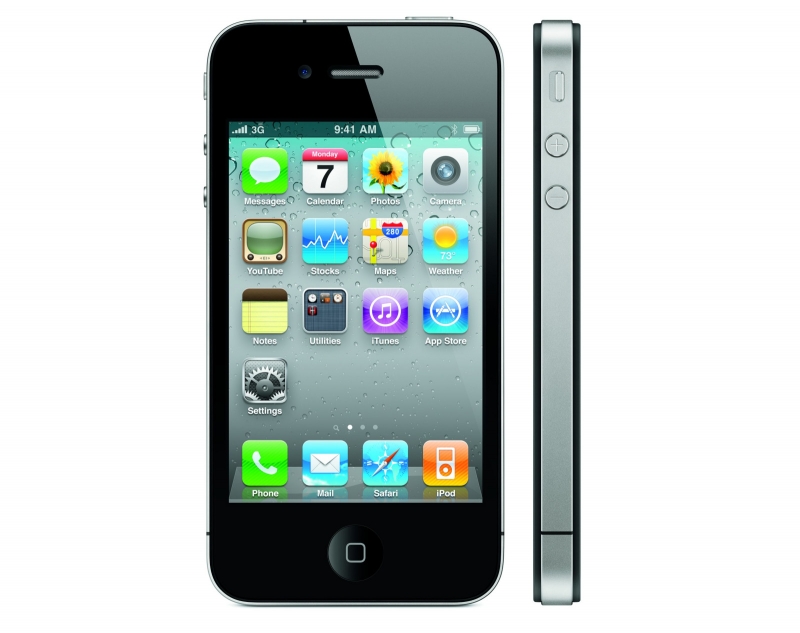
| Apple iPhone 4 | |
|---|---|
| Год выпуска | 2010 |
| Дисплей | LCD, 3,5“, 640 x 960 |
| Процессор | Apple A4, ARM Cortex-A8, 1 x 1 ГГц |
| ОЗУ | 512 |
| Флеш-память | 8/16/32 Гбайт |
| Камера | 5,0 Мп, автофокус |
| Размеры, мм | 115,2 x 58,6 x 9,3 |
| Масса, г | 137 |
| Особенности | iOS, Wi-Fi 802.11 b/g/n, Bluetooth 2.1 |
Читать обзор Apple iPhone 4 на 3DNews
Первый по-настоящему красивый айфон. Если в первом поколении (2G) у айфона был неплохой, но очень быстро царапавшийся алюминиевый корпус, то во втором (3G и 3GS) — ради удешевления, а может, и не только — корпус стал полностью пластиковым и как-то совсем не соответствовал премиум-статусу смартфона. Такая черная мыльница с яблочком.
Пришествие iPhone 4 в 2010-м решило наметившиеся проблемы с дизайном: у Apple получился очень аккуратный аппарат, с обеих сторон закрытый противоударным стеклом. Это сейчас стекло с двух сторон — заезженный прием, который используют все, а тогда это было в новинку. К тому же iPhone 4 очень выгодно отличался от предшественников дисплеем — именно с этого аппарата началась “ретина”, про которую сейчас стараются помнить все производители, чтобы не навлечь гнев пользователей, зацепившихся взглядом о пиксели. Кстати, пользовательские требования тогда были куда мягче, чем сейчас — айфоновские 330 точек на дюйм в те времена казались чудом, а сейчас Александр Бабулин, наверное, уже пожалуется, что пиксель крупноват.
Бессменный босс всея 3DNews Александра Орджоникидзе наверняка до сих пор хранит где-то белый iPhone 4 (а может, это был уже 4s) с выгравированным логотипом нашего сайта. В те времена такой аппарат смотрелся просто потрясающе. Как по мне, это был последний по-настоящему красивый дизайн айфона. Вплоть до 5s (ну или SE) он сохранялся, а дальше пошли скругленные края и какая-то пухлая обезличенность.
Альтернатива: В 2010-м альтернатив iPhone 4 просто не было: красивый, мощный, с качественным экраном и неплохой камерой — не делали в те времена таких аппаратов. Из смартфонов хоть сколько-то близко подошли, наверное, Nokia N8 на Symbian и Sony Xperia X2 на Windows Mobile. Но и тут все разбивалось о дизайн и удобство операционных систем.
⇡#Samsung Galaxy S3
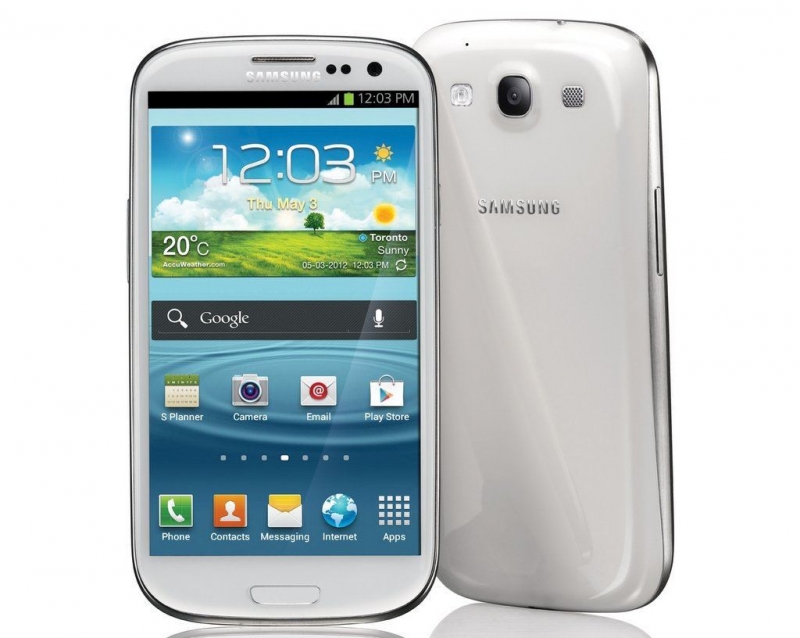
| Samsung Galaxy S3 | |
|---|---|
| Год выпуска | 2012 |
| Дисплей | LCD, 4,8“, 720 x 1280 |
| Процессор | Samsung Exynos 4412, ARM Cortex-A9 4 x 1,4 ГГц |
| ОЗУ | 1 Гбайт |
| Флеш-память | 16/32/64 Гбайт + MicroSD |
| Камера | 8,0 Мп, автофокус |
| Размеры, мм | 136,6 x 70,6 x 8,6 |
| Масса, г | 133 |
| Особенности | Android 4.0, Wi-Fi 802.11 b/g/n, Bluetooth 4.0, |
Читать обзор Samsung Galaxy S3 на 3DNews
Малыш Android много кушал, быстро развивался и почти что научился ходить — над его образованием трудилось такое количество народу из разных компаний, пытавшихся доработать творение Google, что выбора у него просто не было. И первые по-настоящему уверенные шаги, не ползком и не держа маму за ручку, он, как мне кажется, сделал именно с выходом Samsung Galaxy S3.
Это первый аппарат на Android, в котором было все, чего только можно было желать в 2012 году. Здоровенный AMOLED-дисплей, много памяти, быстрый процессор, все возможные беспроводные интерфейсы и все-все-все, что вообще умела мобильная индустрия на тот момент. Впрочем, можно сказать, что все это было и в Galaxy S2, да и в первом Galaxy S, но разница состояла в том, что именно к выходу SGS3 Samsung наконец-то научилась справляться с программной частью так, чтобы она не вызывала отторжение.
То есть в первой итерации TouchWiz был ужасен и требовал обязательной доработки напильником, в SGS2 его изрядно отполировали, но все равно его хотелось куда-нибудь спрятать, а вот в Galaxy S3 он уже не вызывал нервного тика и на равных соперничал с Sense имени HTC. Ну и как раз примерно к выходу третьей “Галактики” смартфоны Samsung в России стали ждать едва ли не так же, как аппараты Apple. Ну а Samsung не жалела средств и каждую пресс-конференцию превращала в шоу. В общем, SGS3 — это своего рода веха, переходный момент для Samsung, да и для всего Android из грязи в князи.
Альтернатива: HTC One S. Тайваньская компания, некогда бывшая однозначным лидером в разработке Android-смартфонов, к этому моменту позиции уже немного сдала, но делать хорошие смартфоны не разучилась. HTC One S предлагал все же более продуманную оболочку и приятный металлический корпус, но уступал по размеру экрана, мощности и качеству камеры. Существовал еще пластиковый One X, формально являвшийся флагманом, но смысла предпочесть его как-то не было. Хотя это, конечно, лично мое мнение.
Да и вся подборка, справедливости ради, тоже субъективная. Наверняка кто-то будет требовать включить сюда первый Xiaomi Redmi — аппарат, принесший Android в массы, кто-то напомнит про первый Samsung Galaxy Note, задавший моду на большие телефоны. Кто-то будет вспоминать HTC Artemis (навигатор и смартфон в одном флаконе — чудо чудное, диво дивное) или Motorola RAZR (первую и последнюю красивую раскладушку). Поэтому я не буду ставить жирную точку в конце материала: если, на ваш взгляд, в списке не хватает какого-то исторически важного для России телефона — смело дописывайте его в комментарии. Поехали!
Если Вы заметили ошибку — выделите ее мышью и нажмите CTRL+ENTER.
Mobile business development is a category of business development which focuses on attracting new customers in the Mobile Web markets. There are large efforts being made to make innovative mobile ICT services work. Examples of these services include mobile tourist guides and shopping guides for potential consumers. As an emerging trend, technology and service providers combine their expertise and resources to design these services. This incorporates designing several models: the Value network, a Value proposition, a Revenue model and a Technological architecture.
Economic value[edit]
Together contributors need to create a business model that forms the blueprint of the cooperating network of organisations intends to create economic value from technological innovation. Therefore, it is useful to define the different relevant issues: Customer Value of services, Organizational arrangements, Technological architecture, and possible financial arrangements.
A business model is:
- An architecture for the product, service and information flows, including a description of the various business actors and their roles.
- A description of the potential benefits for the various business actors.
- A description of the sources of revenues.
Collaboration engineering[edit]
To facilitate the collaboration between the contributors, the methods can be used to act as a guideline for successful innovation during the pre-product phase. Most methods are based on the innovation prototyping method (3), which emphasizes on the balance between different viewpoints.
Mobile business is a communication process, which is based on technology, using software along with electronic assets to be used in different locations. Although this is a relatively new industry, it’s experiencing rapid technological advancements, such as audio and video features, as well as on-screen drawing capabilities, which are transmitted over (secure) networks and enable real time conferences, with possibility of multi-party attendance. These real time conferences are achieved through the use of cellular, wireless and broadband technology, which are not subject to location to work. The mobile technological advancements have enabled the video conferences to be taken beyond the limits of offices, boardrooms, lecture rooms etc. and prove a real collaboration between business and mobile.
Mobile business includes a large number of elements, which undergo big advancements and changes every year, and provide us with countless options to disburden our lives. Some of those elements were already mentioned before (audio, video, telestration – on-screen drawing), with addition of collaboration tools, mobility, telepresence systems and transmission technologies. In present times (especially during the pandemic), the video mobile data traffic is well over two thirds. The most important drivers of mobile business use are remote worker and mobility.
Value for business[edit]
When using technology in order to be more competitive, the use of mobile adaptation strategy presents a totally new view of the business in today’s world. In fact, not using mobile technology, could drop ones competitive strength completely. The mobile business not only makes individual employees more efficient, but it can also improve the workflow of entire company.
For the employees on the field, the use of mobile devices for business purposes means that they can capture and share the data instantly. The business processes and projects can be kept up to date continuously and thoroughly, which results in quick and smooth process.
In order to make sure the mobile business collaboration is successful, firstly, the (mobile) process improvement has to be well thought out, without any disruptions on the corporate culture level. This means that the mobile platform (which business intends to use) is simple enough for all employees to use (their technical skills have to be taken under consideration), as well as containing the ability to cater to all of the necessary business needs. Another point to be considered is to not only look at the text side of things, but employ video and image capturing techniques as well. With this point under consideration, the organization will be able to share their data instantly with its members, which means that actions can be taken as soon as the data is captured. The third important thing in mobile business collaboration, is to define the results to which the business strives, before the implementation of mobile platform. By doing so, the business can measure whether the mobile implementation was a success or not, and by how much it contributes to business (money and time wise). And lastly, the compatibility has to be ensured for cross-devices. People use either iOS or Android devices, and the mobile platform shouldn’t only be limited to one of those operating systems, because broader adaptations are often the ones that lead to success. If all the above-mentioned points are put under consideration, the business can achieve a frictionless and bottle-neckless mobile business collaboration. [1]
Concepts[edit]
Organizational arrangements[edit]
The relative large amount of contributing organisations in innovative ICT services has been the cause of important changes that took place in the value chain of these services.
Traditionally, one company would perform all necessary activities that make the service work. Nowadays, this is often divided between specialized contributors. This invokes the creation of and ad hoc value net, which replaces the more traditional value chain. In this value web there is less hierarchy and it is more adaptable to changes in roles or contributors. There are also no restrictions on the flow of data between the value net, instead it can flow in all directions all the time.
The following definition of a value net can be found in the book «Value Nets: Breaking the Supply Chain to unlock hidden profits», by David Bovet and Joseph Martha, John Wiley & Sons, Inc, 2000:
A value net is a business design that uses digital supply chains to achieve both superior customer satisfaction and company profitability. It is a fast, flexible system that is aligned with and driven by new customer choice mechanisms. A value net is not what the term supply chain conjures up. It is no longer just about supply, but it is also about creating value for customers, the company and its suppliers.
The value net differs from the traditional value chain in the sense that it is not a sequential, rigid chain. Instead, it is a dynamic, high performance network of customer/supplier partnerships and information flows.
Customer value of services[edit]
The Value Proposition model is used to represent the value of the service from the perspective of the end-user (Customer, Consumer). This model is often surprisingly complex for the design of mobile ICT services. This is because the characteristics are very different from physical products. The SHIP-acronym can be used to define four important characteristics of mobile ICT services (3):
- Simultaneously produced and consumed. This mean that the end-user is part of the production of content, and that the producer is also present during the transaction.
- Heterogeneous. This means that there is a (almost) unique instance of the service made for each end-user.
- Intangible. Although the service is intangible, they are often coupled to physical products.
- Perishable. The value of the service disappears after consumption by the end-user.
A value proposition model incorporates the consequences of these characteristics into the development process. This model can be in the form of a textual/graphic model, or even a demonstration version of the proposed service. The composition of the Value Proposition forces the designers to think about different important characteristics of mobile ICT services, the FBBM method addresses the following issues in this context 10:
- Context in which the service will operate, e.g., in a ‘shopping mall’, or at the ‘office’.
- The proposed target group, e.g., ‘museum visitors’, or ‘travelling business people’.
- Added value in comparison of existing services, ‘easier to use’, or ‘gives more information’.
- Estimation of its use, e.g., ‘how often will consumers use it?’, and ‘what does it mean to the user?’.
The information about service-characteristics that are gathered in this part of the Method is usually sketched in use-cases diagrams. This illustrates the part how the proposed services would interact with the end-user.
Financial arrangements[edit]
A Revenue model is used to identify all cash flows concerning the service. These are all costs and revenues that are the result of economic activities. Therefore, the value of each activity must be measured (or approximated) using performance indicators. In the model, the cash flows can be described qualitative at first (high, medium, low) and more in detail at later stages of the development process. The model uses lines representing in- and outgoing cash flows between the value activities and the actors drawn the model. The meta-model consists of the financial arrangements, which describe the costs and the revenues of a service, using performance indicators.
Technology architecture[edit]
The Technology Architecture model is used to give an overview of the technical functions, and infrastructure needed to provide the service. It associates application components from application architecture with technology components representing software and hardware components. The components are assembled and configured to constitute the enterprise’s technological infrastructure. Technology architecture provides a more concrete view of the way in which application components will be realized and deployed. For example, the way information is stored, or content is generated and broadcast.
Technology architecture provides a more precise means of evaluating responses to constraints, notably by estimating hardware and network sizing needs or by setting up server or storage redundancy. It also ensures the delivered application components work together, confirming that the required business integration is supported.
Technique[edit]
The meta model[edit]
After exploring possible or desired Customer value of services model, Organizational arrangements model, financial arrangements Model and Technological Architecture model, are finalized.
This means that they take on their concrete form by actual companies and organizations. This means that the contributing organizations have to fill-in their positions in the value net and decide and negotiate the various design choices for the models.
A good mobile business development method should have a metadata model can be similar to the meta models below.
The outcome, in the form of a business model can be used to communicate an innovative ICT project outline to investors/participants. It describes the proposed value chain in great detail, because it consists of an overview of the sub models (Customer Value of services, Organisational arrangements, Financial arrangements and Technological architecture) that are balanced. In the total scope of the development of an innovative IT service, a business plan is very helpful in the decision process within the organisations of the participants.
Situational method engineering[edit]
Methods can be designed with the use of Situational method engineering. Situational method engineering can be described as the creation of an ad hoc method from fragments (method fragments) from known methods. This enables the creation of development methods to be me suitable for any development situation.
In case of mobile business development, there are methods available for specific parts of the business model design process and ICT development. Situational method engineering can be used to combine these methods into one unified method that adopts the characteristics of mobile ICT services.
The method fragments frequently used in mobile development are (6):
- Quality Function Deployment — Quality function deployment (QFD) is a structured methodology that incorporates mathematical tools used to identify and quantify customers’ requirements and translates them into key critical parameters. For a complete description of the QFD method, see this page in Wikipedia.
- Brainstorm Techniques — The FBBM method uses some brainstorm techniques known for a long time in application development. They are used in development sessions.
- Financial Analysis — The methods incorporated in financial analysis are targeted at calculating the prospects of a firm. By including financial analysis methods in a method, business can calculate important factors like the consumer-price of their services and their Return on Investment (ROI) beforehand.
Benefits of mobile business development[edit]
In today’s world, mobile devices are becoming more and more important. Developing mobile business can therefore prove to be extremely beneficial aspect of one’s business. Firstly, mobile devices allow greater mobility and accessibility of large amounts of data and are being used on daily basis by a vast majority of population. Through mobile devices, businesses thus gain quicker access to a larger number of potential consumers. Developing mobile business can therefore help a business to increase its brand awareness and overall recognition. Businesses can also develop mobile business to better cultivate customer loyalty as this is extremely important. The use of mobile application can also prove to be extremely beneficial as it can be utilized as a direct marketing channel. Mobile applications do provide numerous functions; they can provide general info, prices, booking forms, search features, user accounts, messengers, news feeds and much more. Furthermore, mobile business gives your targeted audience another way to reach and contact you. Lastly, it can greatly improve customer engagement and attract new customers as it does make certain parts of your services easier and less-time consuming for the potential customer. For example, instead of calling a restaurant to make a reservation, booking a table through a mobile app would make the whole process quicker and would require less effort from users, which are nowadays constantly seeking instant gratification.
[2]
Examples[edit]
Shopping mall[edit]
Shop owners in all large shopping mall have a plan to enrich the shopping experience in their mall. They want to develop a wireless application to be used on smart phones or on PDAs, which will be made available for rent at the entrance. The application will have an informative and an entertainment component. This way, the shop owners hope that they will create added value for their customers and improve their competitiveness.
Because there are many contributors to the development of the application (shop owners, (wireless) network provider, hardware provider), the business model is very complex in this case.
The contributors have composed their interpretation of the Value Proposition, the Value Network, the Revenue model and the Technological architecture in a first quick scan. At several more sessions during the pre-product development stage, these work models were compared and balanced. This process then was repeated until all contributors are satisfied with the resulting business model. The end result is a thought through, and working innovative application that is slowly starting to generate more sales for the participants.
Museum[edit]
The museum of modern arts has become inspired by other museums to use modern technology to guide its visitors through the museum. It plans to develop a wireless application that runs on museum owned pda’s that are lent out to visitors at the entrance. The application uses gps to determine the position of the visitor and streaming video and audio to take on the role as museum guide.
The museum board has demanded the creation of a solid business model. The business model will be the basis for future decisions about the project and to explain the project to the museums donators.
The museum has found a partner for its project, a wireless Internet provider (WISP) will provide the network and hardware for the application. The WISP can use the museum for promotional activities in return.
Together they have composed their interpretation of the Value Proposition, the Value Network, the Revenue model and the Technological architecture in a first quick scan. At several more sessions during the pre-product development stage, these work models were compared and balanced. This process then was repeated until both contributors are satisfied with the resulting business model. The end result is a rich media application that is beneficial to the visitors experience and a clear display of wireless capability for future clients of the WISP.
References[edit]
- ^ Smartsheet. 2021. How Mobile Collaboration Can Drive Your Business – and Four Tips for Getting It Right. [online] Available at: https://www.smartsheet.com/content-center/best-practices/tips-tricks/4-tips-for-unlocking-power-of-mobile-collaboration [Accessed 1 June 2021].
- ^ Haselmayr, M. (2014). Here’s Why Your Business Needs Its Own Mobile App. Retrieved June, 5th 2021 from https://www.forbes.com/sites/allbusiness/2014/11/17/heres-why-your-business-needs-its-own-mobile-app/?sh=611ae0dc327f
Scientific papers[edit]
- From Idea to Business Blueprint, Timber Haaker & Marc Steen, January 2003, Telematics Institute.
- Learning about the Business Blueprint in the Dolmen Sessions, Timber Haaker & Marc Steen, February 2003, Telematics institute
- Designing Mobile information services:User requirements elicitation with GSS design and application of a repeatable process, Mariëlle den Hengst, Elisabeth van de Kar, Jaco Appelman, Delft University of Technology, Hawaii International Conference on System Sciences, 2004.
- Brokering Based Balancing of viewpoints — Experience from pre-product development of mobile services, Mervi Ranta and Henrik Asplund, PM&RG, Dept. of Computer science and Development, Helsinki University of Technology (News 2003)
Articles[edit]
- From Idea to successful collaboration (Dutch), Timber Haaker, Henry de Vos & Mark Steen, Management & Organisation, September/October 2004
- Successful innovation aided by business models (Dutch), Timber Haaker, 2004
Journals[edit]
- Ercim News, European Research Consortium for Informatics and Mathematics, July 2003
Books[edit]
- Value Nets, Breaking the supply chain to unlock hidden profits, David Bovet, Joseph Martha, Mercer Management Consulting, 2000, John Wiley & Sons Inc.
- Freeband Business Blueprint Method, Manual, Timber Haaker, Karin Oerlemans, Marc Steen, Henry de Vos, January 2004, Telematics Institute.
Reference websites[edit]
- Business Models for Electronic Markets, Paul Timmers, April 1998 [1]
- Freeband Essentials(Archived page) [2] and Freeband B4U Project(Archived Page) [3]
Mobile business development is a category of business development which focuses on attracting new customers in the Mobile Web markets. There are large efforts being made to make innovative mobile ICT services work. Examples of these services include mobile tourist guides and shopping guides for potential consumers. As an emerging trend, technology and service providers combine their expertise and resources to design these services. This incorporates designing several models: the Value network, a Value proposition, a Revenue model and a Technological architecture.
Economic value[edit]
Together contributors need to create a business model that forms the blueprint of the cooperating network of organisations intends to create economic value from technological innovation. Therefore, it is useful to define the different relevant issues: Customer Value of services, Organizational arrangements, Technological architecture, and possible financial arrangements.
A business model is:
- An architecture for the product, service and information flows, including a description of the various business actors and their roles.
- A description of the potential benefits for the various business actors.
- A description of the sources of revenues.
Collaboration engineering[edit]
To facilitate the collaboration between the contributors, the methods can be used to act as a guideline for successful innovation during the pre-product phase. Most methods are based on the innovation prototyping method (3), which emphasizes on the balance between different viewpoints.
Mobile business is a communication process, which is based on technology, using software along with electronic assets to be used in different locations. Although this is a relatively new industry, it’s experiencing rapid technological advancements, such as audio and video features, as well as on-screen drawing capabilities, which are transmitted over (secure) networks and enable real time conferences, with possibility of multi-party attendance. These real time conferences are achieved through the use of cellular, wireless and broadband technology, which are not subject to location to work. The mobile technological advancements have enabled the video conferences to be taken beyond the limits of offices, boardrooms, lecture rooms etc. and prove a real collaboration between business and mobile.
Mobile business includes a large number of elements, which undergo big advancements and changes every year, and provide us with countless options to disburden our lives. Some of those elements were already mentioned before (audio, video, telestration – on-screen drawing), with addition of collaboration tools, mobility, telepresence systems and transmission technologies. In present times (especially during the pandemic), the video mobile data traffic is well over two thirds. The most important drivers of mobile business use are remote worker and mobility.
Value for business[edit]
When using technology in order to be more competitive, the use of mobile adaptation strategy presents a totally new view of the business in today’s world. In fact, not using mobile technology, could drop ones competitive strength completely. The mobile business not only makes individual employees more efficient, but it can also improve the workflow of entire company.
For the employees on the field, the use of mobile devices for business purposes means that they can capture and share the data instantly. The business processes and projects can be kept up to date continuously and thoroughly, which results in quick and smooth process.
In order to make sure the mobile business collaboration is successful, firstly, the (mobile) process improvement has to be well thought out, without any disruptions on the corporate culture level. This means that the mobile platform (which business intends to use) is simple enough for all employees to use (their technical skills have to be taken under consideration), as well as containing the ability to cater to all of the necessary business needs. Another point to be considered is to not only look at the text side of things, but employ video and image capturing techniques as well. With this point under consideration, the organization will be able to share their data instantly with its members, which means that actions can be taken as soon as the data is captured. The third important thing in mobile business collaboration, is to define the results to which the business strives, before the implementation of mobile platform. By doing so, the business can measure whether the mobile implementation was a success or not, and by how much it contributes to business (money and time wise). And lastly, the compatibility has to be ensured for cross-devices. People use either iOS or Android devices, and the mobile platform shouldn’t only be limited to one of those operating systems, because broader adaptations are often the ones that lead to success. If all the above-mentioned points are put under consideration, the business can achieve a frictionless and bottle-neckless mobile business collaboration. [1]
Concepts[edit]
Organizational arrangements[edit]
The relative large amount of contributing organisations in innovative ICT services has been the cause of important changes that took place in the value chain of these services.
Traditionally, one company would perform all necessary activities that make the service work. Nowadays, this is often divided between specialized contributors. This invokes the creation of and ad hoc value net, which replaces the more traditional value chain. In this value web there is less hierarchy and it is more adaptable to changes in roles or contributors. There are also no restrictions on the flow of data between the value net, instead it can flow in all directions all the time.
The following definition of a value net can be found in the book «Value Nets: Breaking the Supply Chain to unlock hidden profits», by David Bovet and Joseph Martha, John Wiley & Sons, Inc, 2000:
A value net is a business design that uses digital supply chains to achieve both superior customer satisfaction and company profitability. It is a fast, flexible system that is aligned with and driven by new customer choice mechanisms. A value net is not what the term supply chain conjures up. It is no longer just about supply, but it is also about creating value for customers, the company and its suppliers.
The value net differs from the traditional value chain in the sense that it is not a sequential, rigid chain. Instead, it is a dynamic, high performance network of customer/supplier partnerships and information flows.
Customer value of services[edit]
The Value Proposition model is used to represent the value of the service from the perspective of the end-user (Customer, Consumer). This model is often surprisingly complex for the design of mobile ICT services. This is because the characteristics are very different from physical products. The SHIP-acronym can be used to define four important characteristics of mobile ICT services (3):
- Simultaneously produced and consumed. This mean that the end-user is part of the production of content, and that the producer is also present during the transaction.
- Heterogeneous. This means that there is a (almost) unique instance of the service made for each end-user.
- Intangible. Although the service is intangible, they are often coupled to physical products.
- Perishable. The value of the service disappears after consumption by the end-user.
A value proposition model incorporates the consequences of these characteristics into the development process. This model can be in the form of a textual/graphic model, or even a demonstration version of the proposed service. The composition of the Value Proposition forces the designers to think about different important characteristics of mobile ICT services, the FBBM method addresses the following issues in this context 10:
- Context in which the service will operate, e.g., in a ‘shopping mall’, or at the ‘office’.
- The proposed target group, e.g., ‘museum visitors’, or ‘travelling business people’.
- Added value in comparison of existing services, ‘easier to use’, or ‘gives more information’.
- Estimation of its use, e.g., ‘how often will consumers use it?’, and ‘what does it mean to the user?’.
The information about service-characteristics that are gathered in this part of the Method is usually sketched in use-cases diagrams. This illustrates the part how the proposed services would interact with the end-user.
Financial arrangements[edit]
A Revenue model is used to identify all cash flows concerning the service. These are all costs and revenues that are the result of economic activities. Therefore, the value of each activity must be measured (or approximated) using performance indicators. In the model, the cash flows can be described qualitative at first (high, medium, low) and more in detail at later stages of the development process. The model uses lines representing in- and outgoing cash flows between the value activities and the actors drawn the model. The meta-model consists of the financial arrangements, which describe the costs and the revenues of a service, using performance indicators.
Technology architecture[edit]
The Technology Architecture model is used to give an overview of the technical functions, and infrastructure needed to provide the service. It associates application components from application architecture with technology components representing software and hardware components. The components are assembled and configured to constitute the enterprise’s technological infrastructure. Technology architecture provides a more concrete view of the way in which application components will be realized and deployed. For example, the way information is stored, or content is generated and broadcast.
Technology architecture provides a more precise means of evaluating responses to constraints, notably by estimating hardware and network sizing needs or by setting up server or storage redundancy. It also ensures the delivered application components work together, confirming that the required business integration is supported.
Technique[edit]
The meta model[edit]
After exploring possible or desired Customer value of services model, Organizational arrangements model, financial arrangements Model and Technological Architecture model, are finalized.
This means that they take on their concrete form by actual companies and organizations. This means that the contributing organizations have to fill-in their positions in the value net and decide and negotiate the various design choices for the models.
A good mobile business development method should have a metadata model can be similar to the meta models below.
The outcome, in the form of a business model can be used to communicate an innovative ICT project outline to investors/participants. It describes the proposed value chain in great detail, because it consists of an overview of the sub models (Customer Value of services, Organisational arrangements, Financial arrangements and Technological architecture) that are balanced. In the total scope of the development of an innovative IT service, a business plan is very helpful in the decision process within the organisations of the participants.
Situational method engineering[edit]
Methods can be designed with the use of Situational method engineering. Situational method engineering can be described as the creation of an ad hoc method from fragments (method fragments) from known methods. This enables the creation of development methods to be me suitable for any development situation.
In case of mobile business development, there are methods available for specific parts of the business model design process and ICT development. Situational method engineering can be used to combine these methods into one unified method that adopts the characteristics of mobile ICT services.
The method fragments frequently used in mobile development are (6):
- Quality Function Deployment — Quality function deployment (QFD) is a structured methodology that incorporates mathematical tools used to identify and quantify customers’ requirements and translates them into key critical parameters. For a complete description of the QFD method, see this page in Wikipedia.
- Brainstorm Techniques — The FBBM method uses some brainstorm techniques known for a long time in application development. They are used in development sessions.
- Financial Analysis — The methods incorporated in financial analysis are targeted at calculating the prospects of a firm. By including financial analysis methods in a method, business can calculate important factors like the consumer-price of their services and their Return on Investment (ROI) beforehand.
Benefits of mobile business development[edit]
In today’s world, mobile devices are becoming more and more important. Developing mobile business can therefore prove to be extremely beneficial aspect of one’s business. Firstly, mobile devices allow greater mobility and accessibility of large amounts of data and are being used on daily basis by a vast majority of population. Through mobile devices, businesses thus gain quicker access to a larger number of potential consumers. Developing mobile business can therefore help a business to increase its brand awareness and overall recognition. Businesses can also develop mobile business to better cultivate customer loyalty as this is extremely important. The use of mobile application can also prove to be extremely beneficial as it can be utilized as a direct marketing channel. Mobile applications do provide numerous functions; they can provide general info, prices, booking forms, search features, user accounts, messengers, news feeds and much more. Furthermore, mobile business gives your targeted audience another way to reach and contact you. Lastly, it can greatly improve customer engagement and attract new customers as it does make certain parts of your services easier and less-time consuming for the potential customer. For example, instead of calling a restaurant to make a reservation, booking a table through a mobile app would make the whole process quicker and would require less effort from users, which are nowadays constantly seeking instant gratification.
[2]
Examples[edit]
Shopping mall[edit]
Shop owners in all large shopping mall have a plan to enrich the shopping experience in their mall. They want to develop a wireless application to be used on smart phones or on PDAs, which will be made available for rent at the entrance. The application will have an informative and an entertainment component. This way, the shop owners hope that they will create added value for their customers and improve their competitiveness.
Because there are many contributors to the development of the application (shop owners, (wireless) network provider, hardware provider), the business model is very complex in this case.
The contributors have composed their interpretation of the Value Proposition, the Value Network, the Revenue model and the Technological architecture in a first quick scan. At several more sessions during the pre-product development stage, these work models were compared and balanced. This process then was repeated until all contributors are satisfied with the resulting business model. The end result is a thought through, and working innovative application that is slowly starting to generate more sales for the participants.
Museum[edit]
The museum of modern arts has become inspired by other museums to use modern technology to guide its visitors through the museum. It plans to develop a wireless application that runs on museum owned pda’s that are lent out to visitors at the entrance. The application uses gps to determine the position of the visitor and streaming video and audio to take on the role as museum guide.
The museum board has demanded the creation of a solid business model. The business model will be the basis for future decisions about the project and to explain the project to the museums donators.
The museum has found a partner for its project, a wireless Internet provider (WISP) will provide the network and hardware for the application. The WISP can use the museum for promotional activities in return.
Together they have composed their interpretation of the Value Proposition, the Value Network, the Revenue model and the Technological architecture in a first quick scan. At several more sessions during the pre-product development stage, these work models were compared and balanced. This process then was repeated until both contributors are satisfied with the resulting business model. The end result is a rich media application that is beneficial to the visitors experience and a clear display of wireless capability for future clients of the WISP.
References[edit]
- ^ Smartsheet. 2021. How Mobile Collaboration Can Drive Your Business – and Four Tips for Getting It Right. [online] Available at: https://www.smartsheet.com/content-center/best-practices/tips-tricks/4-tips-for-unlocking-power-of-mobile-collaboration [Accessed 1 June 2021].
- ^ Haselmayr, M. (2014). Here’s Why Your Business Needs Its Own Mobile App. Retrieved June, 5th 2021 from https://www.forbes.com/sites/allbusiness/2014/11/17/heres-why-your-business-needs-its-own-mobile-app/?sh=611ae0dc327f
Scientific papers[edit]
- From Idea to Business Blueprint, Timber Haaker & Marc Steen, January 2003, Telematics Institute.
- Learning about the Business Blueprint in the Dolmen Sessions, Timber Haaker & Marc Steen, February 2003, Telematics institute
- Designing Mobile information services:User requirements elicitation with GSS design and application of a repeatable process, Mariëlle den Hengst, Elisabeth van de Kar, Jaco Appelman, Delft University of Technology, Hawaii International Conference on System Sciences, 2004.
- Brokering Based Balancing of viewpoints — Experience from pre-product development of mobile services, Mervi Ranta and Henrik Asplund, PM&RG, Dept. of Computer science and Development, Helsinki University of Technology (News 2003)
Articles[edit]
- From Idea to successful collaboration (Dutch), Timber Haaker, Henry de Vos & Mark Steen, Management & Organisation, September/October 2004
- Successful innovation aided by business models (Dutch), Timber Haaker, 2004
Journals[edit]
- Ercim News, European Research Consortium for Informatics and Mathematics, July 2003
Books[edit]
- Value Nets, Breaking the supply chain to unlock hidden profits, David Bovet, Joseph Martha, Mercer Management Consulting, 2000, John Wiley & Sons Inc.
- Freeband Business Blueprint Method, Manual, Timber Haaker, Karin Oerlemans, Marc Steen, Henry de Vos, January 2004, Telematics Institute.
Reference websites[edit]
- Business Models for Electronic Markets, Paul Timmers, April 1998 [1]
- Freeband Essentials(Archived page) [2] and Freeband B4U Project(Archived Page) [3]