

i will deal with a simple .dll and meet the above question.

Error 126 means that the library is not found. So change the name when referring the lib.

This can also mean that the dll that is being loaded relies on other dlls in the same folder. If that folder is not in the search path (as is our case) then you will get the 126 error meaning that it can not find the dll or one of the dlls that it needs. As it turns out win32-dlfcn.cc changed in a recent release and broke our code. It went from using LoadLibraryEx to using LoadLibraryW which handles search paths differently. The fix is to go back to using LoadLibraryExW with the flag LOAD_WITH_ALTERED_SEARCH_PATH or using SetDllDirectory(…) with LoadLibraryW. A third option (which we can not use) is to make sure that the path to the dll(s) is in the systems environment path.
Hello,
I added a new issue with a better explanation, issue #322 (I don’t know if I should have but I was hoping to bring more attention to this issue). I also attached my fix to the win32-dlfcn.cc file that I use to that issue. It has been working for me. The easiest way to fix this is to simply add the path to the dlls to the system environment path, that way the function that needs to look up the dlls can find them. The way I did it was to modify win32-dlfcn.cc to temporarily add the path then remove it. Both ways work. To use the win32-dlfcn.cc fix, replace the current «node_modulesffisrcwin32-dlfcn.cc» with the one that I attached in issue #322 then do an «npm rebuild ffi».
p.s. My fix to win32-dlfcn.cc has been working for me but has not been tested by anyone else. I posted it to issue #322 to maybe help someone else.

I got this issue after creating packager.
I was using my own dll. While developing app and running it with npm start, I got no error. It was working fine.
But when i created package using electron-packager, i got this issue.
The problem was that the new package created did not have my dll file.
The solution was, i copied and pasted it inside the package.. Its working now.

Hi,
I have also run into the same issue. I have my own dll file which I’ve packaged into the asar. But the problem is I’m getting the Win32 error 126. So I ran the «asar l package.asar» to check if my dll made it into the package and it has. But still I do receive the same error. @ishwarrimal Could you please let me know what are the steps that you did in order to resolve this error.
Thanks
@bsshashank I manually copied my dll file to the package that was created. It worked in my system at that time. But then later when i created installer and tried installing on other PC, I got some error. I don’t remember the error name, but the problem was that the dependencies were missing. The dll file generated was using some external tool, so it has some dependencies on the tool that was installed in my pc. Make use of dependency walker tool to see what dependency you’re missing.
Nwz for the error youre talking about, the only thing I did was copy paste of the dll file..kz while creating package, electron did not add the dll file in it.
Hi,
The reason for the dll not being loaded after packaging into the asar was because it’s a legacy application and it was trying to create new files which is not possible inside an asar. I followed a different approach to solve this.
I modified the source code of the native application in order to change it’s working directory to that of the Documents folder of the user. So it works by creating the files inside the user’s documents folder and not in the asar itself.

I have written a library that depends on FreeImage.DLL. Tried to put both in a ./lib folder in my project but then i got this error.
If the FreeImage.DLL is in the project root folder, the problem disappear. Any clues to solve this issue?

is there anyone can help me?how to call the «SetDllDirectory» fun?

Hi, I work with rsfernandes and here is the code that we used:
»’
const ffi = require(‘ffi’);
var kernel32 = ffi.Library(«kernel32», {
‘SetDllDirectoryA’: [«bool», [«string»]]
})
kernel32Api.SetDllDirectoryA(«pathToAdd»);
»’
aKaigege reacted with confused emoji


I got this issue after creating packager.
I was using my own dll. While developing app and running it with npm start, I got no error. It was working fine.
But when i created package using electron-packager, i got this issue.
The problem was that the new package created did not have my dll file.
The solution was, i copied and pasted it inside the package.. Its working now.
@ishwarrimal where to find «my own dll», and which folder is the «package»? Sorry, I am not familiar with the setting on Windows. Thanks!

I am also getting the problem but in my case not showing any error , the dll is not loading from the asar and asar got the dll ….could anyone help to fix this

Same issue here. Using electron-builder as nsis, received this error in some of cases, don’t know why it happening

const ffi = require('ffi-napi');

var kernel32 = ffi.Library("kernel32", {
'SetDllDirectoryA': ["bool", ["string"]]
})
kernel32.SetDllDirectoryA("pathToAdd");
no idea what this does but it ran through

:
Thank you very much,Successfully solved the problem in the project.
Содержание
- Что делать, если ошибка 126 «Не найден указанный модуль»?
- Причины ошибки 126
- Как исправить ошибку 126?
- Способ 1: автоматическое исправление проблем с DLL-файлами
- Способ 2: временно отключаем антивирус
- Способ 3: обновляем Microsoft NET Framework
- Способ 4: переустанавливаем DirectX
- Способ 5: сканируем системные файлы Windows
- Способ 6: восстанавливаем системные реестр
- Способ 7: делаем откат Windows
- problem :Error: Dynamic Linking Error: Win32 error 126 ? #294
- Comments
- Footer
- Error: Oynamic Linking Error: Win32 error 126 at new OynamicLibrary #17536
- Comments
- How to fix DLL error 126 on Windows 10?
- Methods that can help to fix DLL error 126 on Windows 10
- Option 1. Disable security program
- Option 2. Reinstall the program that gives you error
- Option 3. Install firmware drivers update
- Option 4. Run Windows troubleshooter and perform system check
- Option 5. Update Microsoft NET Framework
- Repair your Errors automatically
- Prevent websites, ISP, and other parties from tracking you
- Recover your lost files quickly
Что делать, если ошибка 126 «Не найден указанный модуль»?
Ошибки с кодами 126, реже 127, ссылаются на то, что «Не найден указанный модуль». Таким образом легко сделать вывод – в Windows 7, 8, 10 недостает какого-то файла. Это действительно часто означает отсутствие DLL-библиотеки, но не всегда. Дело может быть и в других неприятных неполадках с реестром или системой защиты и т. п. Вполне может быть, что все дело и в самой программе, которая этот сбой провоцирует. Мы поможем исправить ошибку (Error 126) своими силами, ничего особо сложного в этом нет. Однако, предупреждаем, что неправильные действия в реестре или при взаимодействии с драйверами могут вызвать негативные последствия для работы операционной системы.
Причины ошибки 126
Если отображается ошибка 126 «Не найден модуль» – можем сделать вывод о наличии одной из перечисленных ниже проблем:
- отсутствует, не зарегистрирован или поврежден DLL-файл;
- неправильная настройка или нарушение целостности системных файлов;
- некорректная установка программы или она была чем-то прервана;
- повреждение Windows вирусами;
- сбой в системном реестре;
- проблема в драйверах, настройке оборудования или его несовместимости с версией операционной системы.
Как исправить ошибку 126?
Мы разработали серию решений проблемы, одно из них обязано помочь, так как исправляет каждую из перечисленных проблем. Логично, что после устранения неполадки, все должно заработать правильно.
Способ 1: автоматическое исправление проблем с DLL-файлами
Есть специальная утилита, которая автоматически сканирует системные библиотеки и сравнивает их с эталоном. Если она обнаружит, что какого-то файла или нескольких, недостает, она сама их загрузит. Также происходит анализ битых, поврежденных и модифицированных файлов. Это очень удобно и быстро в сравнении с ручным способом и, что немаловажно, еще и более безопасно. На личном опыте, программа работает стабильно и не устанавливает файлы, зараженные вирусами. Однако любые манипуляции с DLL-библиотеками сложно назвать полностью безопасными.
Инструкция по устранению ошибки 126:
- Загружаем программу Restoro PC Repair Tool. Лучше это делать с официального сайта.
- Устанавливаем и запускаем софт. Нажимаем на кнопку «Начать сканирование» (Start Scan).
- После процедуры анализа системы кликаем по клавише «Восстановить все» (Repair All).

Важное достоинство программы – она оптимизирует компьютер, увеличивая его производительность (если в системе есть какие-то проблемы с DLL). Ее можно оставить в качестве настольного софта, так как утилита решает большой спектр проблем.
Способ 2: временно отключаем антивирус
Есть большая вероятность, что ошибка 126 спровоцирована антивирусной защитой системы. Если в момент установки программы антивирус посчитал один из компонентов угрозой и заблокировал его, он будет отсутствовать, а система писать «Не найден указанный модуль». В целом желательно отключать защиту в момент установки программ, которым доверяем.
- Выключаем антивирус (встроенный Защитник Windows и/или сторонний).
- Полностью удаляем программу через «Программы и компоненты» (пункт находится в Панели управления).
- Начинаем установку утилиты снова, проверив, что сейчас антивирус не работает.
- Проверяем результат.
Если сейчас программа заработала нормально, рекомендуем открыть антивирус и добавить в список его исключений данный софт. В противном случае со временем ошибка может вернуться, ведь антивирусная защита снова может заблокировать или удалить файл.
Важно! Для максимального результата лучше сделать полное удаление программы. Для этого можем воспользоваться iObit Uninstaller. Софт анализирует систему и ищет остатки файлов приложения, удаляя и их.
Способ 3: обновляем Microsoft NET Framework
Устаревание платформы Microsoft NET Framework нередко приводит к ошибкам с кодом 126 и 127. Благо, это просто решается, достаточно обновить среду. Если дело было в этом, все должно заработать. Скачать актуальную версию NET Framework можем с официального сайта Microsoft.
Способ 4: переустанавливаем DirectX
Очень много DLL-файлов напрямую связаны с DirectX, поэтому есть высокая вероятность, что сообщение «Не найден указанный модуль» относится к данному программному компоненту. Его легко переустановить, так как DirectX тоже распространяет Microsoft совершенно бесплатно и для любых версий, конфигураций операционной системы. С установкой проблем быть не должно, за исключением одного момента – желательно, перед началом инсталляции софта удалить старую версию DirectX.
Способ 5: сканируем системные файлы Windows
Во всех актуальных версиях Windows есть встроенный инструмент анализа системных файлов. Он часто помогает при различных проблемах с DLL-файлами.
Как запустить системные файлы:
- В поиск Windows вводим cmd и запускаем «Командную строку».
- Вводим команду sfc /scannow.
- Ждем завершения сканирования системы. Все ошибки должны быть исправлены автоматически, если такая возможность есть.
Способ 6: восстанавливаем системные реестр
Ошибка 126 и 127 может быть следствием скопления мусора в реестре или повреждения значений в нем. Одна проблема – вручную все перелистать и исправить просто нереально. Для этого лучше использовать специальные программы, например, Total System Care. В утилите есть все необходимое для анализа системного реестра, его оптимизации и исправления существующих проблем. Еще можем порекомендовать CCleaner. Обе программы справятся со своими задачами.
Способ 7: делаем откат Windows
Если никакие ручные способы исправления не помогают, что бывает редко, приходится обратиться к последнему методу и откатить Windows к последнему рабочему состоянию. Иногда файлы DLL могут пропадать из-за удаления программы, и вы можете столкнуться с ошибкой 126. Чтобы устранить ее, воспользуйтесь точками восстановления. Найти «Параметры восстановления» можем через поиск в Windows.
Теперь ошибка с кодом 126 больше не должна беспокоить пользователя как в Windows 7, так и 8, 10. Одна из процедур практически 100% должна исправить проблему. При этом мы не рекомендуем вручную менять DLL-файл, если удалось обнаружить в каком именно проблема. Все из-за чрезмерно высокого шанса загрузить вирус.
Источник
problem :Error: Dynamic Linking Error: Win32 error 126 ? #294
i will deal with a simple .dll and meet the above question.
The text was updated successfully, but these errors were encountered:
Error 126 means that the library is not found. So change the name when referring the lib.
This can also mean that the dll that is being loaded relies on other dlls in the same folder. If that folder is not in the search path (as is our case) then you will get the 126 error meaning that it can not find the dll or one of the dlls that it needs. As it turns out win32-dlfcn.cc changed in a recent release and broke our code. It went from using LoadLibraryEx to using LoadLibraryW which handles search paths differently. The fix is to go back to using LoadLibraryExW with the flag LOAD_WITH_ALTERED_SEARCH_PATH or using SetDllDirectory(. ) with LoadLibraryW. A third option (which we can not use) is to make sure that the path to the dll(s) is in the systems environment path.
I added a new issue with a better explanation, issue #322 (I don’t know if I should have but I was hoping to bring more attention to this issue). I also attached my fix to the win32-dlfcn.cc file that I use to that issue. It has been working for me. The easiest way to fix this is to simply add the path to the dlls to the system environment path, that way the function that needs to look up the dlls can find them. The way I did it was to modify win32-dlfcn.cc to temporarily add the path then remove it. Both ways work. To use the win32-dlfcn.cc fix, replace the current «node_modulesffisrcwin32-dlfcn.cc» with the one that I attached in issue #322 then do an «npm rebuild ffi».
p.s. My fix to win32-dlfcn.cc has been working for me but has not been tested by anyone else. I posted it to issue #322 to maybe help someone else.
I got this issue after creating packager.
I was using my own dll. While developing app and running it with npm start, I got no error. It was working fine.
But when i created package using electron-packager, i got this issue.
The problem was that the new package created did not have my dll file.
The solution was, i copied and pasted it inside the package.. Its working now.
Hi,
I have also run into the same issue. I have my own dll file which I’ve packaged into the asar. But the problem is I’m getting the Win32 error 126. So I ran the «asar l package.asar» to check if my dll made it into the package and it has. But still I do receive the same error. @ishwarrimal Could you please let me know what are the steps that you did in order to resolve this error.
@bsshashank I manually copied my dll file to the package that was created. It worked in my system at that time. But then later when i created installer and tried installing on other PC, I got some error. I don’t remember the error name, but the problem was that the dependencies were missing. The dll file generated was using some external tool, so it has some dependencies on the tool that was installed in my pc. Make use of dependency walker tool to see what dependency you’re missing.
Nwz for the error youre talking about, the only thing I did was copy paste of the dll file..kz while creating package, electron did not add the dll file in it.
@xblox and @ishwarrimal Thanks for the reply. I’ll try it out and post here if it works.
The reason for the dll not being loaded after packaging into the asar was because it’s a legacy application and it was trying to create new files which is not possible inside an asar. I followed a different approach to solve this.
I modified the source code of the native application in order to change it’s working directory to that of the Documents folder of the user. So it works by creating the files inside the user’s documents folder and not in the asar itself.
I have written a library that depends on FreeImage.DLL. Tried to put both in a ./lib folder in my project but then i got this error.
If the FreeImage.DLL is in the project root folder, the problem disappear. Any clues to solve this issue?
is there anyone can help me?how to call the «SetDllDirectory» fun?
Hi, I work with rsfernandes and here is the code that we used:
»’
const ffi = require(‘ffi’);
var kernel32 = ffi.Library(«kernel32», <
‘SetDllDirectoryA’: [«bool», [«string»]]
>)
kernel32Api.SetDllDirectoryA(«pathToAdd»);
»’
I got this issue after creating packager.
I was using my own dll. While developing app and running it with npm start, I got no error. It was working fine.
But when i created package using electron-packager, i got this issue.
The problem was that the new package created did not have my dll file.
The solution was, i copied and pasted it inside the package.. Its working now.
@ishwarrimal where to find «my own dll», and which folder is the «package»? Sorry, I am not familiar with the setting on Windows. Thanks!
I am also getting the problem but in my case not showing any error , the dll is not loading from the asar and asar got the dll . could anyone help to fix this
Same issue here. Using electron-builder as nsis, received this error in some of cases, don’t know why it happening
no idea what this does but it ran through
Thank you very much,Successfully solved the problem in the project.
© 2023 GitHub, Inc.
You can’t perform that action at this time.
You signed in with another tab or window. Reload to refresh your session. You signed out in another tab or window. Reload to refresh your session.
Источник
Error: Oynamic Linking Error: Win32 error 126 at new OynamicLibrary #17536
electron: 4.0.4
node:10.11.0
^ Error
A JavaScript error occurred in the main process
Uncaught Exception:
Error: Oynamic Linking Error: Win32 error 126 at new OynamicLibrary
(C:U5ersYeastarAppOataLocalProgram5Linku5re50urcesapp.asarnode at Object-Library
(C:U5ersYeastarAppOataLocalProgram5Linku5re50urcesapp.asarnode at Object.
(C:U5ersYeastarAppOataLocalProgram5Linku5re50urcesapp.asarmai. 37675) at t
(C:U5ersYeastarAppOataLocalProgram5Linku5re50urcesapp.asarmain. 256) at Object.
(C:U5ersYeastarApp0ataLocalProgramsLinku5re5〇urcesapp.asarmai. 91171) at t
(C:U5ersYeastarAppOataLocalProgram5Linku5re50urcesapp.asarmain. 256) at Object.
(C:U5ersYeastarAppOataLocalProgram5Linku5re50urcesapp.asarmai. 88987) at t
(C:U5ersYeastarAppOataLocalProgram5Linku5re50urcesapp.asarmain. 256) at Object.
(C:U5ersYeastarAppOataLocalProgram5Linku5re50urcesapp.asarmai. 88735) at t
(C:U5ersYeastarAppOataLocalProgram5Linku5re50urcesapp.asarmain. 256)
mm
When the package environment runs the installation package, there is no problem on other winodws computers. Except for the win10 professional version, this problem will be reported. Then I downgrade the electron version to 1.8.4, there will be no such problem.
The text was updated successfully, but these errors were encountered:
Источник
How to fix DLL error 126 on Windows 10?
Issue: How to fix DLL error 126 on Windows 10?
Windows gave me DLL error 126. How can I fix it?
DLL errors 126 and 127 are quite common on Windows 10. Both of the errors inform about an issue with a Dynamic Link Library (DLL) file. [1] Usually, the error shows up because the file is corrupted or missing. However, the problem might be outdated drivers too.
In some cases, the DLL error 126 might inform about the system error. However, you should not start panicking once you encounter such pop-up:
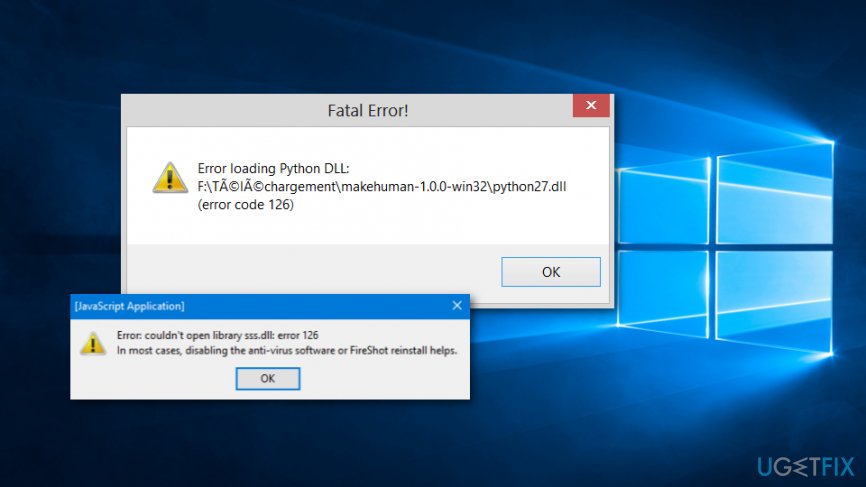
Error Loading DLL: Error Code 126
System failure is a rare occasion for this DLL error. Typically, it’s enough to fix the problem by disabling antivirus, reinstalling a troublesome program, updating drivers, etc. Thus, do not hesitate and try methods given below.
Methods that can help to fix DLL error 126 on Windows 10
We recommend starting from the beginning and trying simple methods first. Though, if they do not help, go further with provided options.
Option 1. Disable security program
Your antivirus, anti-malware or firewall [2] may have identified specific files as malicious or potentially dangerous. Thus, this DLL file may have been added to quarantine. For this reason, you should recover it. However, if security software does not let you do it, follow these steps:
- Disable your security program.
- Uninstall and reinstall the program that given you Dll error 126/127.
- Run the program without enabling antivirus to check if the error comes back.
- If you do not receive an error, you should add an exclusion rule within your security software.
Option 2. Reinstall the program that gives you error
Uninstalling and reinstalling the program that gives an error might solve the problem. If some of the program-related files are missing or corrupted, they will be fixed as soon as you finish reinstalling the program.
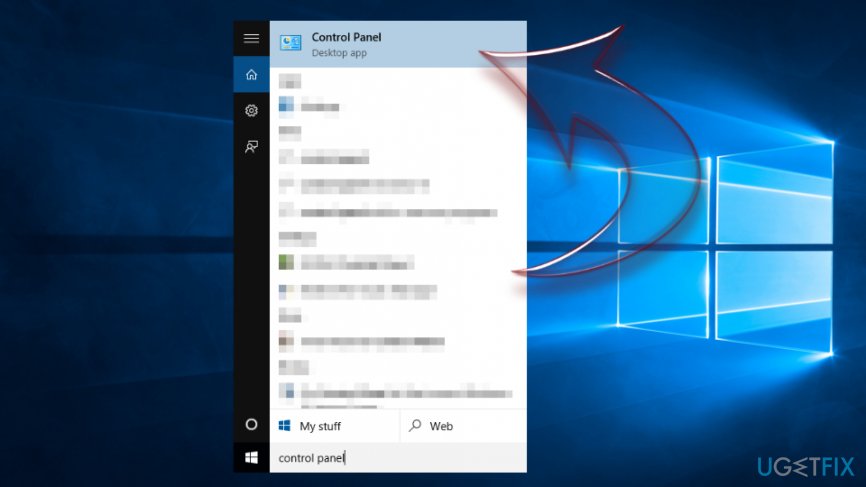
- Type Control Panel in the Windows search box.
- Click on the program in the results list.
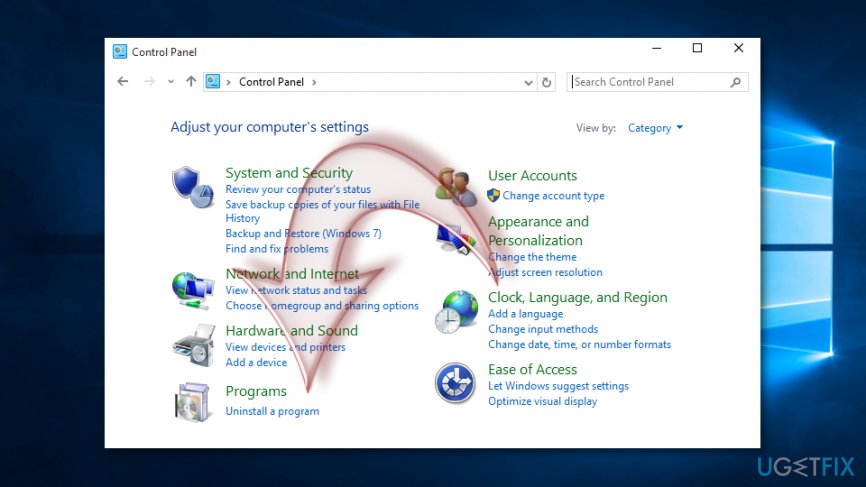
Find the program on the list, click it and choose Uninstall.
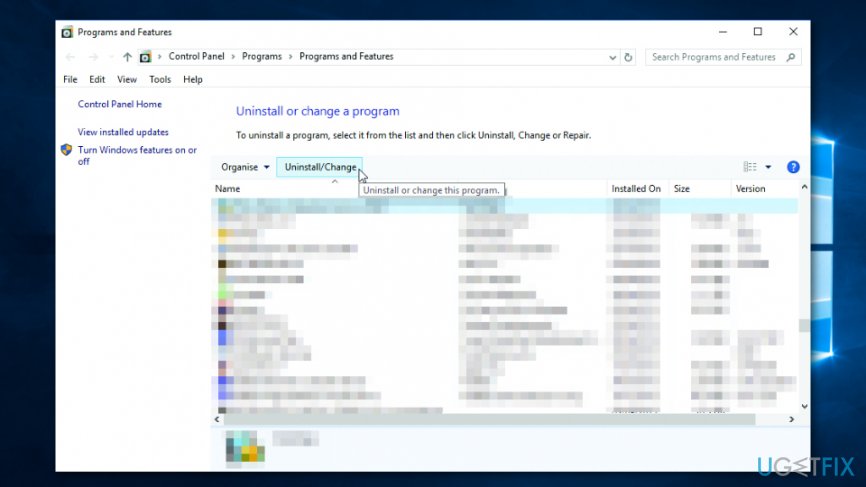
Then, you have to download the program again from the official website. Once it’s done, try to run a program to see if the DLL error 126 comes back.
Option 3. Install firmware drivers update
- Right-click Start button and choose Device Manager from the list.
- When in Device Manager, find the Firmware option and extend it.
- Here you should see System Firmware option. Right-click on it and choose Update driver.
- When the procedure is finished, reboot the computer.
Option 4. Run Windows troubleshooter and perform system check
- Right-click Start button and choose Command Prompt (Admin) from the list.
- In the Command Prompt type sfc /scannow and click Enter.
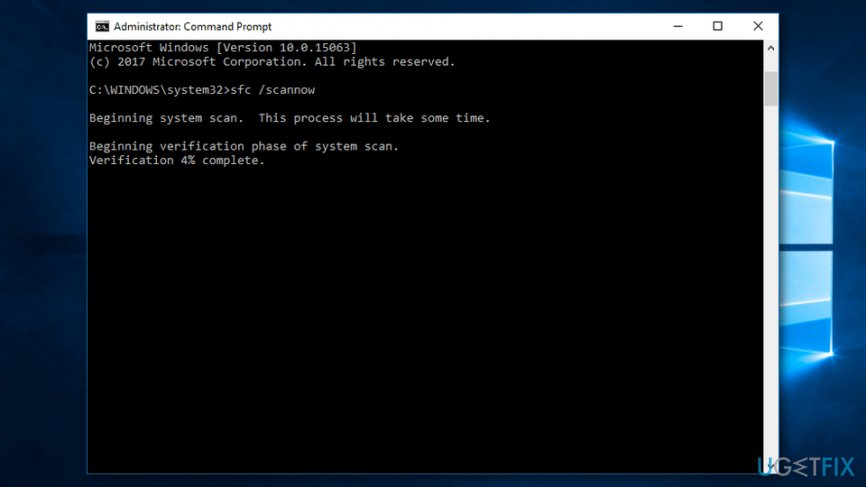
Option 5. Update Microsoft NET Framework
If none of the methods above helped to get rid of DLL error 126/127, the problem might be related to outdated Microsoft NET Framework [3] which is a software framework that includes a large class library and allows different programming languages to interact and operate properly.
Hence, if this software is outdated, computer-related problems might occur. Thus, you can download the latest version of Net Framework from the official Microsoft’s website.
Repair your Errors automatically
ugetfix.com team is trying to do its best to help users find the best solutions for eliminating their errors. If you don’t want to struggle with manual repair techniques, please use the automatic software. All recommended products have been tested and approved by our professionals. Tools that you can use to fix your error are listed bellow:

Prevent websites, ISP, and other parties from tracking you
To stay completely anonymous and prevent the ISP and the government from spying on you, you should employ Private Internet Access VPN. It will allow you to connect to the internet while being completely anonymous by encrypting all information, prevent trackers, ads, as well as malicious content. Most importantly, you will stop the illegal surveillance activities that NSA and other governmental institutions are performing behind your back.
Recover your lost files quickly
Unforeseen circumstances can happen at any time while using the computer: it can turn off due to a power cut, a Blue Screen of Death (BSoD) can occur, or random Windows updates can the machine when you went away for a few minutes. As a result, your schoolwork, important documents, and other data might be lost. To recover lost files, you can use Data Recovery Pro – it searches through copies of files that are still available on your hard drive and retrieves them quickly.

Linas Kiguolis is a qualified IT expert that loves sharing his excellent knowledge about problems in Windows and Mac operating systems. Linas’ insights often help other team members find quick solutions for visitors of UGetFix site.
Источник
I want to call a function which is written in «C» DLL from node.js javascript. I am using «ffi» module in node.js and electron. The function which I want to call is «int FDColor_GetSWVersion(char* softwareVersion)». I am using the below code:
 var libm = ffi.Library(__dirname + "\viewmodels\FDColor.dll", {
      'FDColor_GetSWVersion': [ 'int', ['string' ] ]
    });
But I am getting the error «Dynamic Linking Error: Win32 error 126». Could anyone please help me out
asked Jul 1, 2016 at 11:17

7
When you get «the specified module cannot be found», this refers to the DLL you tried to load or any of its dependencies.
You have given a full path to the ffi.Library function, but when FDColor.dll loads its dependencies it will probably use no path, which causes LoadLibrary to look first in the current-working-directory of the process and then in the directories of the PATH environment variable.
So,
-
Use DependencyWalker (http://www.dependencywalker.com/) on FDColor.dll to see if it has any dependencies. The best way to do that is to call it from the same place as you call this script (giving the same path you pass to ffi.Library).
-
For each DLL it would try to load, but is not found, you need to add the folder to the PATH environment variable of the environment that calls this script.
-
You can check that you have done this right by repeating step 1 after setting PATH at the command prompt. DependencyWalker will now show that it can find those DLLs.
answered Jul 1, 2016 at 13:25

Lou FrancoLou Franco
87.3k14 gold badges134 silver badges191 bronze badges
5
- Remove From My Forums
-
Question
-
Hi,
I have to load multiple DLLs of from my exe. When i tried to load DLLs of size more than 50kb ,loadlibrary api geeting failed and getlasterror() returning error code 126.If i tried to load the same DLL by reducing its size(commanded some partn of code),
its loading that DLL properly.Can anyone guess the problem with my application. I can able to load the same DLL in debug mode and through IDE but while running exe, its giving memory exception since loadlibrary returns a null pointer.
can anyone help me to to fix this problem ?
Answers
-
Hi guys,
Thanks for your replies.
I found the issue , that is because of missing dlls that are needed to execute my application from exe.
Once i added that dependent dll’s, my application working fine.
-
Marked as answer by
Monday, August 12, 2013 7:50 AM
-
Marked as answer by
Что делать, если ошибка 126 «Не найден указанный модуль»?
Ошибки с кодами 126, реже 127, ссылаются на то, что «Не найден указанный модуль». Таким образом легко сделать вывод – в Windows 7, 8, 10 недостает какого-то файла. Это действительно часто означает отсутствие DLL-библиотеки, но не всегда. Дело может быть и в других неприятных неполадках с реестром или системой защиты и т. п. Вполне может быть, что все дело и в самой программе, которая этот сбой провоцирует. Мы поможем исправить ошибку (Error 126) своими силами, ничего особо сложного в этом нет. Однако, предупреждаем, что неправильные действия в реестре или при взаимодействии с драйверами могут вызвать негативные последствия для работы операционной системы.
Причины ошибки 126
Если отображается ошибка 126 «Не найден модуль» – можем сделать вывод о наличии одной из перечисленных ниже проблем:
- отсутствует, не зарегистрирован или поврежден DLL-файл;
- неправильная настройка или нарушение целостности системных файлов;
- некорректная установка программы или она была чем-то прервана;
- повреждение Windows вирусами;
- сбой в системном реестре;
- проблема в драйверах, настройке оборудования или его несовместимости с версией операционной системы.
Как исправить ошибку 126?
Мы разработали серию решений проблемы, одно из них обязано помочь, так как исправляет каждую из перечисленных проблем. Логично, что после устранения неполадки, все должно заработать правильно.
Способ 1: автоматическое исправление проблем с DLL-файлами
Есть специальная утилита, которая автоматически сканирует системные библиотеки и сравнивает их с эталоном. Если она обнаружит, что какого-то файла или нескольких, недостает, она сама их загрузит. Также происходит анализ битых, поврежденных и модифицированных файлов. Это очень удобно и быстро в сравнении с ручным способом и, что немаловажно, еще и более безопасно. На личном опыте, программа работает стабильно и не устанавливает файлы, зараженные вирусами. Однако любые манипуляции с DLL-библиотеками сложно назвать полностью безопасными.
Инструкция по устранению ошибки 126:
- Загружаем программу Restoro PC Repair Tool. Лучше это делать с официального сайта.
- Устанавливаем и запускаем софт. Нажимаем на кнопку «Начать сканирование» (Start Scan).
- После процедуры анализа системы кликаем по клавише «Восстановить все» (Repair All).
Важное достоинство программы – она оптимизирует компьютер, увеличивая его производительность (если в системе есть какие-то проблемы с DLL). Ее можно оставить в качестве настольного софта, так как утилита решает большой спектр проблем.
Способ 2: временно отключаем антивирус
Есть большая вероятность, что ошибка 126 спровоцирована антивирусной защитой системы. Если в момент установки программы антивирус посчитал один из компонентов угрозой и заблокировал его, он будет отсутствовать, а система писать «Не найден указанный модуль». В целом желательно отключать защиту в момент установки программ, которым доверяем.
- Выключаем антивирус (встроенный Защитник Windows и/или сторонний).
- Полностью удаляем программу через «Программы и компоненты» (пункт находится в Панели управления).
- Начинаем установку утилиты снова, проверив, что сейчас антивирус не работает.
- Проверяем результат.
Если сейчас программа заработала нормально, рекомендуем открыть антивирус и добавить в список его исключений данный софт. В противном случае со временем ошибка может вернуться, ведь антивирусная защита снова может заблокировать или удалить файл.
Важно! Для максимального результата лучше сделать полное удаление программы. Для этого можем воспользоваться iObit Uninstaller. Софт анализирует систему и ищет остатки файлов приложения, удаляя и их.
Способ 3: обновляем Microsoft NET Framework
Устаревание платформы Microsoft NET Framework нередко приводит к ошибкам с кодом 126 и 127. Благо, это просто решается, достаточно обновить среду. Если дело было в этом, все должно заработать. Скачать актуальную версию NET Framework можем с официального сайта Microsoft.
Способ 4: переустанавливаем DirectX
Очень много DLL-файлов напрямую связаны с DirectX, поэтому есть высокая вероятность, что сообщение «Не найден указанный модуль» относится к данному программному компоненту. Его легко переустановить, так как DirectX тоже распространяет Microsoft совершенно бесплатно и для любых версий, конфигураций операционной системы. С установкой проблем быть не должно, за исключением одного момента – желательно, перед началом инсталляции софта удалить старую версию DirectX.
Способ 5: сканируем системные файлы Windows
Во всех актуальных версиях Windows есть встроенный инструмент анализа системных файлов. Он часто помогает при различных проблемах с DLL-файлами.
Как запустить системные файлы:
- В поиск Windows вводим cmd и запускаем «Командную строку».
- Вводим команду sfc /scannow.
- Ждем завершения сканирования системы. Все ошибки должны быть исправлены автоматически, если такая возможность есть.
Способ 6: восстанавливаем системные реестр
Ошибка 126 и 127 может быть следствием скопления мусора в реестре или повреждения значений в нем. Одна проблема – вручную все перелистать и исправить просто нереально. Для этого лучше использовать специальные программы, например, Total System Care. В утилите есть все необходимое для анализа системного реестра, его оптимизации и исправления существующих проблем. Еще можем порекомендовать CCleaner. Обе программы справятся со своими задачами.
Способ 7: делаем откат Windows
Если никакие ручные способы исправления не помогают, что бывает редко, приходится обратиться к последнему методу и откатить Windows к последнему рабочему состоянию. Иногда файлы DLL могут пропадать из-за удаления программы, и вы можете столкнуться с ошибкой 126. Чтобы устранить ее, воспользуйтесь точками восстановления. Найти «Параметры восстановления» можем через поиск в Windows.
Теперь ошибка с кодом 126 больше не должна беспокоить пользователя как в Windows 7, так и 8, 10. Одна из процедур практически 100% должна исправить проблему. При этом мы не рекомендуем вручную менять DLL-файл, если удалось обнаружить в каком именно проблема. Все из-за чрезмерно высокого шанса загрузить вирус.
Источник
Ошибка 126 не найден указанный модуль – как исправить
Автор: Юрий Белоусов · Опубликовано 22.03.2017 · Обновлено 13.04.2017
Ошибка 126 не найден указанный модуль – как исправить
Если при загрузке операционной системы Windows 7 или XP или при запуске некоторых приложений на этой ОС появляется ошибка « System Error. Code: 126. Не найден указанный модуль » или же « LoadLibrary failed with error 126: Не найден указанный модуль », то вам следует сделать ознакомиться с инструкцией.
Устранение системной ошибки 126 в установщике модулей Windows
Для исправления ошибки следует:
- Запустить командную строку от имени администратора. Для этого нужно зайти в меню «Пуск» и вписать команду cmd . Потом правой кнопкой мыши вызвать контекстное меню и нажать «Запуск от имени администратора».

- Затем в появившемся окне с командной строкой следует написать следующую команду:
Для Windows x64: COPY atio6axx.dll .dll
Для Windows x32: COPY atioglxx.dll .dll
(Стоит отметить, что в командной строке не работают клавиши Ctrl+C и Ctrl+V. Поэтому следует вставлять с помощью правой кнопкой мыши, если вы конечно скопировали код, а не прописали вручную).
Затем следует нажать Enter. - Когда запросит подтверждение копирования файла нужно будет написать Yes ;
- Затем прописать или скопировать:
Для Windows x64: copy atio6axx.dll atiogl64.dll
Для Windows x32: copy atioglxx.dll atiogl32.dll - В завершении – перезагрузить компьютер.


Обязательно обратите внимание, что перед вводом команды путь должен быть таким:
Если вдруг пусть указан другой, то нужно сделать следующее:
- Убедиться, что вы запустили командную строку от имени администратора;
- Если путь по-прежнему неправильный, то прописать следующее:
CD /d C:Windowssystem32
И нажать Enter.
А потом следовать инструкции из первой части.
P.S. Если пишет «Не удается найти указанный файл», то фиг его знает как с этим бороться. Если вдруг кто-нибудь найдет решение проблемы, буду признателен за комментарий.
Надеюсь, статья «Ошибка 126 не найден указанный модуль – как исправить» была вам полезна.
Источник
Не найден указанный модуль: “Ошибка 126” (Error 126)
Опубликовано 14.05.2022 · Обновлено 05.06.2022
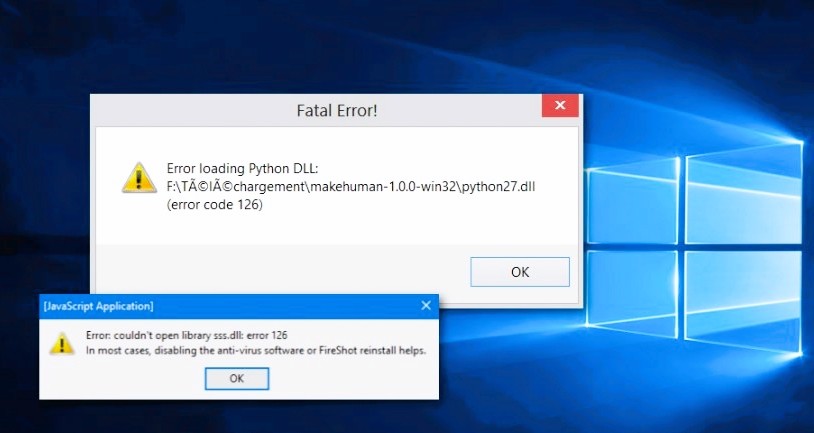
«Не найден указанный модуль DLL: Ошибка 126 (Error 126)» возникает, когда операционная система не может загрузить или обработать интегральные системные настройки, необходимые для запуска определенной службы на компьютере.
Службы предназначены для того, чтобы операционная система могла выполнять определенные функции, такие как сетевые адаптеры, брандмауэр Windows, удаленный доступ и многое другое.
«Ошибка 126: не найден указанный модуль» («Error 126: The specified module could not be found») – одна из наиболее часто встречающихся ошибок на компьютерах под управлением Windows. Эта ошибка не характерна для какой-либо конкретной программы и может возникнуть при попытке запустить и/или установить что-либо.
Причины возникновения «Ошибка 126: не найден указанный модуль» DLL
Основная причина возникновения «Ошибки 126 (Error 126): не найден указанный модуль» на Windows заключается в том, что Windows не может найти файлы DLL, необходимые для запуска процесса установки, так сказать для динамического связывания и это может произойти по любой из следующих причин:
- Файлы DLL могут отсутствовать в каталоге динамической компоновки вашей системы.
- Необходимые файлы могли быть случайно удалены вами. DLL-файлы находятся в папке Windows на диске C и пользователи не проходят этот путь регулярно, поэтому такая возможность встречается довольно редко.
Наиболее частая причина ошибки 126 – повреждение файлов DLL, они могут быть повреждены из-за множества причин, таких как: ненормальное завершение любого процесса, принудительное закрытие задач, неправильное завершение работы системы, неудачное удаление, вредоносные программы, вирусные атаки и т.д.
- Если файлы DLL не повреждены и не удалены из системы, проблема должна быть в реестре Windows. Все файлы DLL, присутствующие в системе, должны быть зарегистрированы в Windows, но иногда из-за некоторых ошибок в записях реестра эти файлы не регистрируются. Из-за этого файлы DLL не загружаются, когда они необходимы установщику Windows.
Исправляем “Ошибку 126 (Error 126): не найден указанный модуль DLL” на Windows
Существуют меры, при которых ваши DLL-файлы всегда будут в безопасности:
- Запустить проверку диска: попробуйте иногда запускать проверку диска или лучше запланировать проверку диска. Он проанализирует жесткий диск на наличие системных ошибок и повреждений файлов.
- Восстановление файлов вручную: просто перейдите в командную строку и выполните эту команду: SFC SCANNOW. Для выполнения этой команды потребуются права администратора. Он автоматически найдет и исправит ошибки в файлах Windows.
- Обновите антивирус и выполните полное сканирование системы, чтобы удалить из нее вредоносные программы и вирусы.
- Переустановите программное обеспечение, которое вызывает ошибку: он восстановит связанный с ним DLL файл, а также обновит реестр вашей системы.
“Не найден указанный модуль”: при загрузке Windows
При загрузке Windows, такая ошибка появляется, когда отсутствует какой-то файл, который был прописан в автозагрузку, и которого сейчас нет. Можно предположить, что его мог удалить ваш антивирус, распознав в нем вирусное ПО. Такое бывает, хоть и не часто.
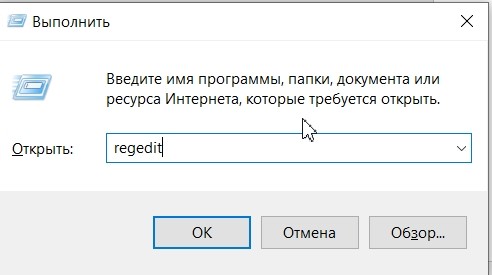
- Запустите редактор реестра: «Win+R» — regedit
- Перейдите по пути: HKEY_LOCAL_MACHINESOFTWAREMicrosoftWindows NTCurrentVersionWinlogon
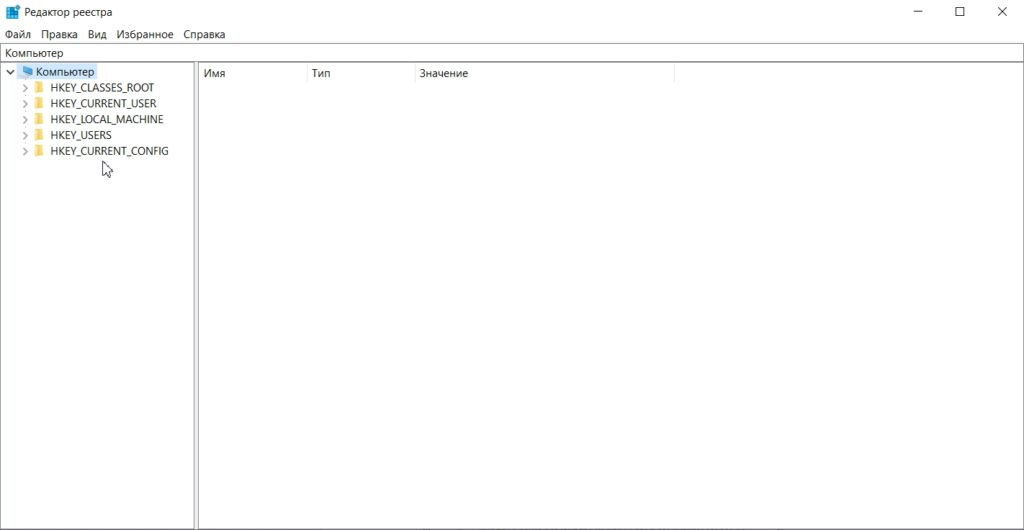
- Параметр Shell должен иметь значение explorer.exe. Если обнаружили, какое-то другое значение, тогда удалите его. Точно также нужно поступить с параметром Userinit, который должен иметь значение – C:WindowsSystem32userinit.exe
- После выполненных действий перезагрузите компьютер.
Ошибка 126 “Указанный модуль не найден”: при запуске приложения
Если код ошибки 126 возникает при запуске приложения, как правило, достаточно просто найти рабочую версию приложения и скопировать взамен старого неработающего.
Если говорить о драйверах, то лучшим решением будет посетить сайт производителя и установить последнюю версию. Можно также, при наличии компьютера с подобным ПО, скопировать из него недостающий файл.
“Не найден указанный модуль, ошибка 126”: при подключении USB-накопителей
Есть в любой операционной системе такая служба, которая называется “Доступ к НID-устройствам”. Как и любая системная служба, она серьезно влияет на работоспособность системы. Но данная служба имеет непосредственное виляние на большинство USB-устройств.
Часто бывает так, что служба может не запуститься по каким-либо причинам! Соответственно, раз эта служба не запустилась, то возникают проблемы с USB – устройствами. Особенно часто можно столкнуться с такой проблемой в ОС Мicrosoft Windows Ноme Еdition.
Выглядит проблема так: При запуске сервиса “Доступ к НID-устройствам” вылезает ошибка “Служба Доступ к НID-устройствам не запущена. Ошибка 126: не найден указанный модуль”. Если такое случилось, не стоит отчаиваться, проблема вполне решаема.
Возможно, что служба просто отключена (бывает так, что служба отключается, хотя раньше она работала). Поэтому, всё что от вас требуется – включить её самостоятельно.
Включаем службу “Доступ к НID-устройствам”
- Для этого надо войти в “Панель управления” и выбрать раздел “Службы”.
- Далее, вы увидите большой перечень служб, которые установлены на вашем компьютере. Прокрутите перечень вниз и найдите нужную службу – “Доступ к НID-устройствам”.
- Внимательно посмотрите в раздел “Тип запуска” и если надо, то переключите эту службу в режим “Авто” (просто кликните на этой службе два раза левой кнопкой мышки, установите тип в режим “Авто” и нажмите “Применить” и “Ок”). Проблема должна решиться сразу.
Однако, если всё же переключение не помогло, либо служба и так была включена, то можно провести следующие действия:
- Открываем системную папку “Windows” и находим в ней файл Drivers.cab, который расположен в папке “i386”.
- Откройте эту папку и извлеките из неё три файла:hidserv.dll, mouclass.sys и mouhid.sys
- Создайте на рабочем столе папку, перетащите в неё эти три файла и перезагрузите систему в “Безопасном режиме”.
- Затем войдите в системную папку “Windows” – “system32” и скопируйте туда три файла hidserv.dll, mouclass.sys и mouhid.sys.
- Перезагрузите систему (проблема решается в 99 случаях из 100).
А чтобы с вашим компьютером возникало меньше проблем, необходимо регулярно проводить его оптимизацию и очистку системы, для этого необходимо использовать специализированные программы, которые в полной мере позаботятся о вашем компьютере!
Источник

problem :Error: Dynamic Linking Error: Win32 error 126 ?
i will deal with a simple .dll and meet the above question.

Error 126 means that the library is not found. So change the name when referring the lib.

This can also mean that the dll that is being loaded relies on other dlls in the same folder. If that folder is not in the search path (as is our case) then you will get the 126 error meaning that it can not find the dll or one of the dlls that it needs. As it turns out win32-dlfcn.cc changed in a recent release and broke our code. It went from using LoadLibraryEx to using LoadLibraryW which handles search paths differently. The fix is to go back to using LoadLibraryExW with the flag LOAD_WITH_ALTERED_SEARCH_PATH or using SetDllDirectory(…) with LoadLibraryW. A third option (which we can not use) is to make sure that the path to the dll(s) is in the systems environment path.
Hello,
I added a new issue with a better explanation, issue #322 (I don’t know if I should have but I was hoping to bring more attention to this issue). I also attached my fix to the win32-dlfcn.cc file that I use to that issue. It has been working for me. The easiest way to fix this is to simply add the path to the dlls to the system environment path, that way the function that needs to look up the dlls can find them. The way I did it was to modify win32-dlfcn.cc to temporarily add the path then remove it. Both ways work. To use the win32-dlfcn.cc fix, replace the current «node_modulesffisrcwin32-dlfcn.cc» with the one that I attached in issue #322 then do an «npm rebuild ffi».
p.s. My fix to win32-dlfcn.cc has been working for me but has not been tested by anyone else. I posted it to issue #322 to maybe help someone else.

I got this issue after creating packager.
I was using my own dll. While developing app and running it with npm start, I got no error. It was working fine.
But when i created package using electron-packager, i got this issue.
The problem was that the new package created did not have my dll file.
The solution was, i copied and pasted it inside the package.. Its working now.

Hi,
I have also run into the same issue. I have my own dll file which I’ve packaged into the asar. But the problem is I’m getting the Win32 error 126. So I ran the «asar l package.asar» to check if my dll made it into the package and it has. But still I do receive the same error. @ishwarrimal Could you please let me know what are the steps that you did in order to resolve this error.
Thanks
@bsshashank I manually copied my dll file to the package that was created. It worked in my system at that time. But then later when i created installer and tried installing on other PC, I got some error. I don’t remember the error name, but the problem was that the dependencies were missing. The dll file generated was using some external tool, so it has some dependencies on the tool that was installed in my pc. Make use of dependency walker tool to see what dependency you’re missing.
Nwz for the error youre talking about, the only thing I did was copy paste of the dll file..kz while creating package, electron did not add the dll file in it.
Hi,
The reason for the dll not being loaded after packaging into the asar was because it’s a legacy application and it was trying to create new files which is not possible inside an asar. I followed a different approach to solve this.
What approach did you follow?
…
I modified the source code of the native application in order to change it’s working directory to that of the Documents folder of the user. So it works by creating the files inside the user’s documents folder and not in the asar itself.

I have written a library that depends on FreeImage.DLL. Tried to put both in a ./lib folder in my project but then i got this error.
If the FreeImage.DLL is in the project root folder, the problem disappear. Any clues to solve this issue?

is there anyone can help me?how to call the «SetDllDirectory» fun?

Hi, I work with rsfernandes and here is the code that we used:
»’
const ffi = require(‘ffi’);
var kernel32 = ffi.Library(«kernel32», {
‘SetDllDirectoryA’: [«bool», [«string»]]
})
kernel32Api.SetDllDirectoryA(«pathToAdd»);
»’


I got this issue after creating packager.
I was using my own dll. While developing app and running it with npm start, I got no error. It was working fine.
But when i created package using electron-packager, i got this issue.
The problem was that the new package created did not have my dll file.
The solution was, i copied and pasted it inside the package.. Its working now.
@ishwarrimal where to find «my own dll», and which folder is the «package»? Sorry, I am not familiar with the setting on Windows. Thanks!

I am also getting the problem but in my case not showing any error , the dll is not loading from the asar and asar got the dll ….could anyone help to fix this

Same issue here. Using electron-builder as nsis, received this error in some of cases, don’t know why it happening

const ffi = require('ffi-napi');

var kernel32 = ffi.Library("kernel32", {
'SetDllDirectoryA': ["bool", ["string"]]
})
kernel32.SetDllDirectoryA("pathToAdd");
no idea what this does but it ran through

:
Thank you very much,Successfully solved the problem in the project.